
The Atkins name runs through Dunmanway’s commercial story from early industrial times to present day modern science, linking local tanneries and mills with world‑class RNA research. Theirs is a story of early rural industrialisation and of supporting community.
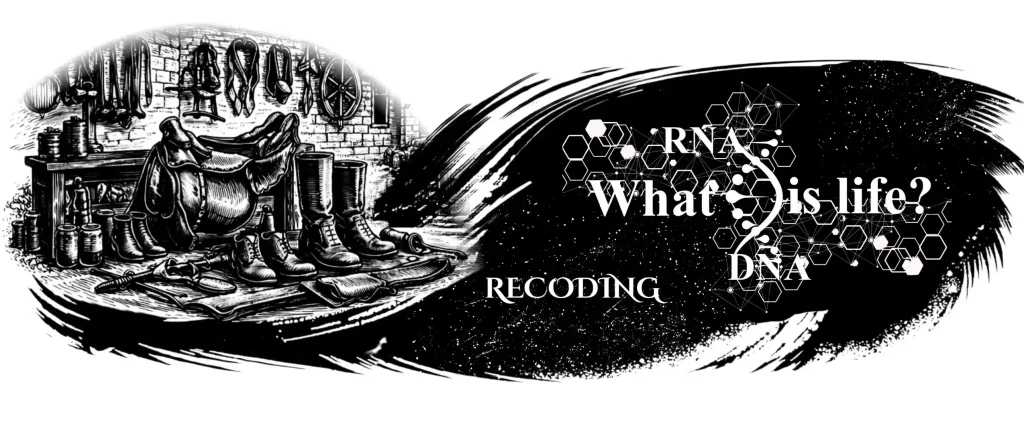
At the start of the 1700s the Atkins family moved from a rented farm in the townland of Lettergorman, 8km North to Dunmanway town. They were involved in harness making and started a shoe shop on the North East end of the main square. In the 1790s John Atkins established a tannery to generate leather diagonally across the road close to the river. Remnants of it were discovered in the 1980’s during construction related to a supermarket at the site. Two more tanneries were later erected with the third being in what is now a car park at the end of tan yard lane. A significant proportion of the output from the third tannery was exported to Northampton in England and some to France. Under Atkins proprietorship, the tanning industry contributed significantly to Dunmanway’s reputation as an industrial town rather than simply an agricultural market centre.
Most of the hides came from local suppliers though some were from such distant destinations as Colorado. According to local sources about 35 hides were tanned together. For 50 or so years before the last tanyard closed in 1929, there was an adjacent bridge across the river to stables. The third tannery building was demolished in 1961, the year the last train left Dunmanway.
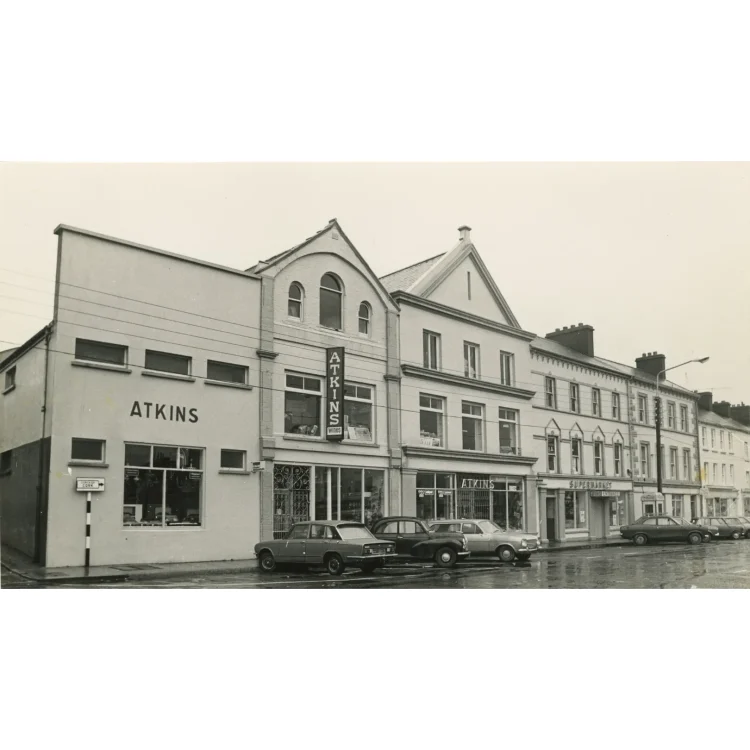
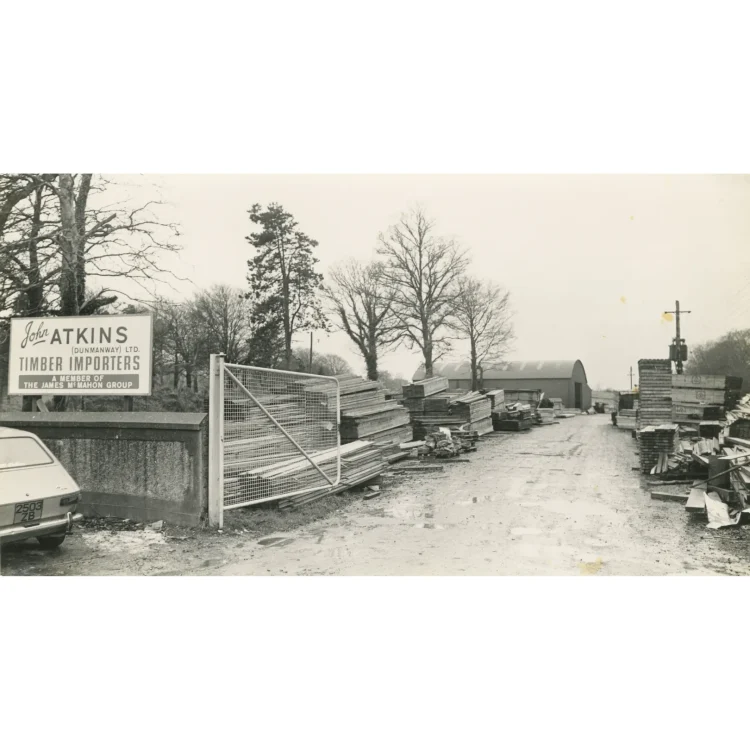
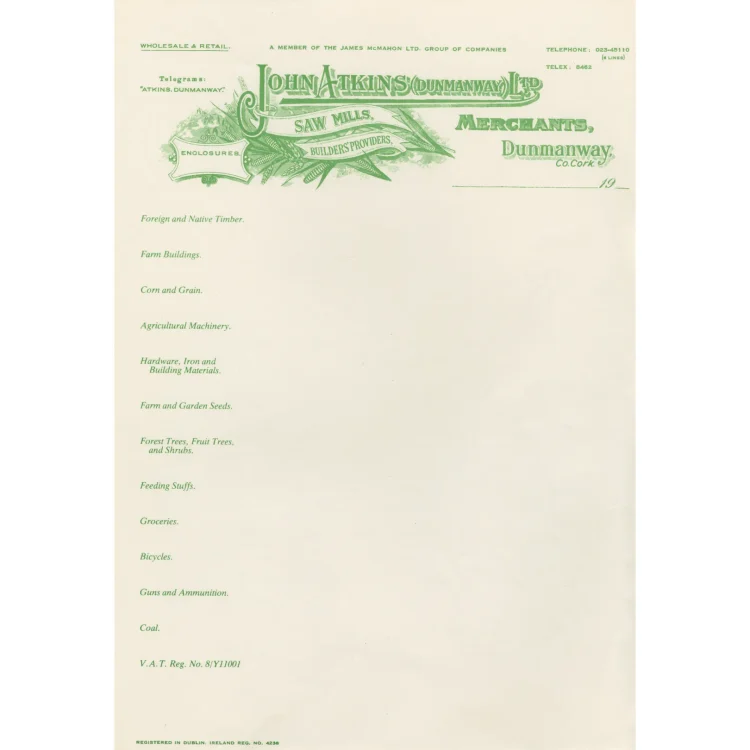
Before the 1840s the Atkins business had started to develop a complex at the Southern end of the town. This complex included grain mills for animal feedstuffs. When the railway arrived in 1866, a siding was constructed along the side of the mills and greatly facilitated the use of maize and other imports in the rations. In the 1960s grain drying machines for local barley were purchased and a silo built. Another part of the complex was sawmills including a rack bench for cutting logs into planks. This was especially important during the second world war when it was powered by a Blackstone engine. There was a carpentry shop whose output included coffins for the associated Undertaking Department. The firm’s wholesale grocery, and a small retail grocery was also in the complex. Grocery product brands such as Atkins “Supreme” brands were commonplace in the twentieth century.
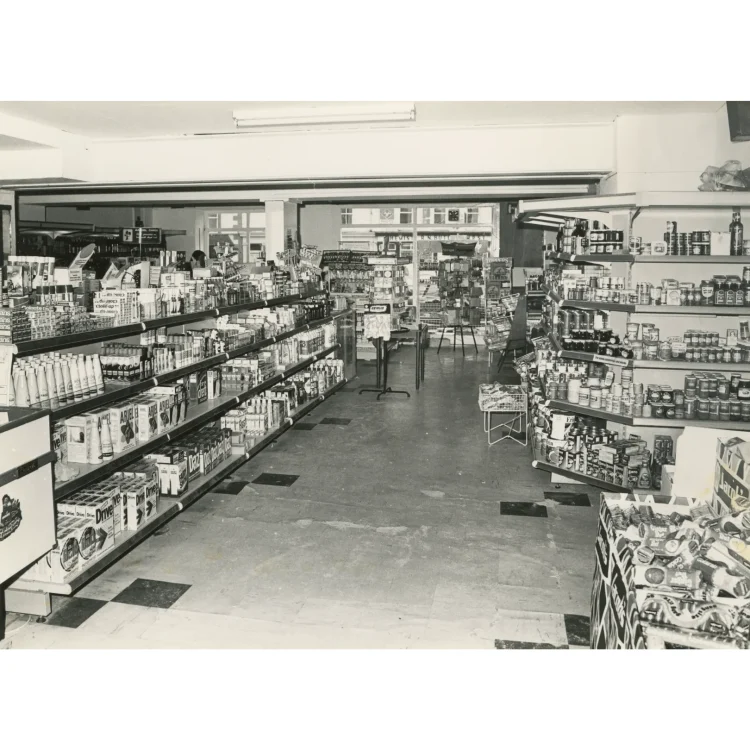
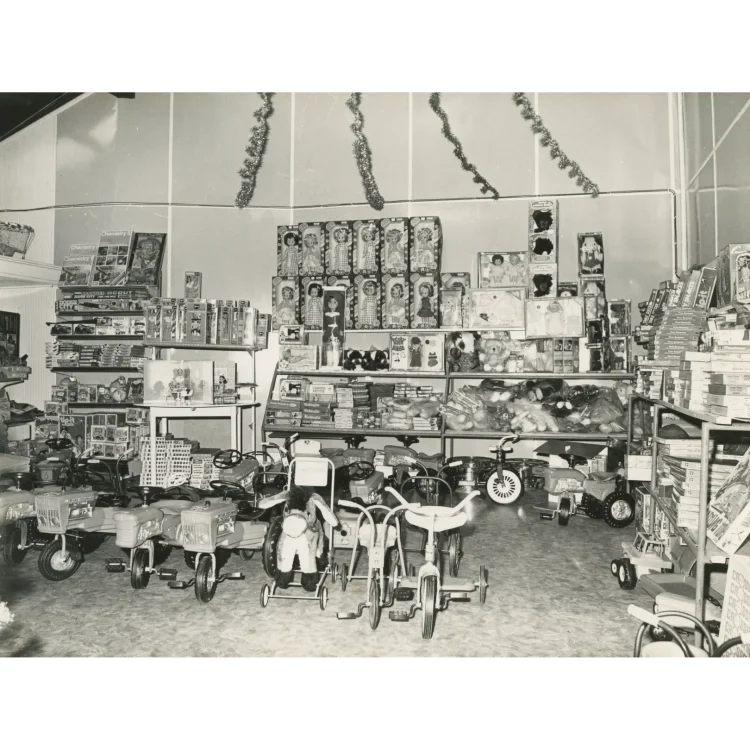
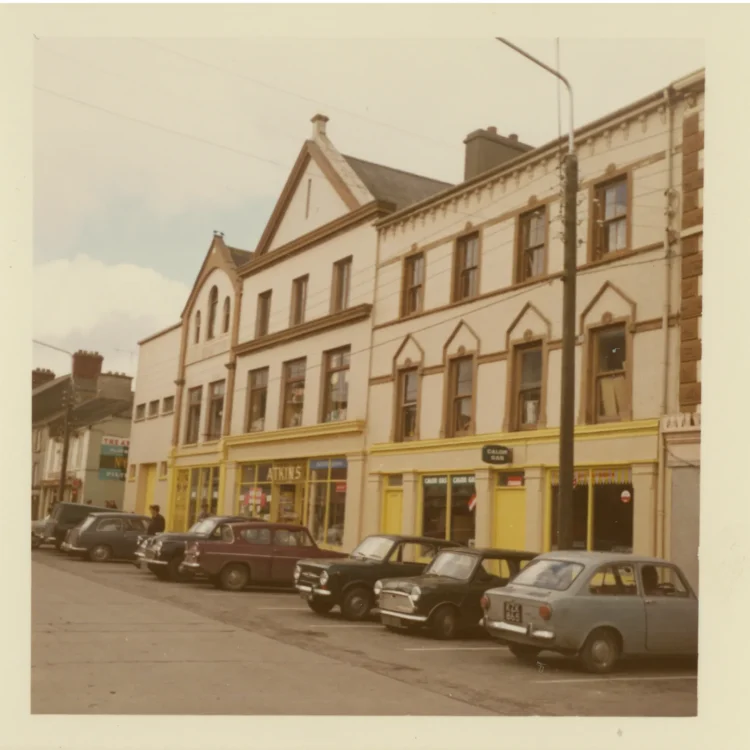
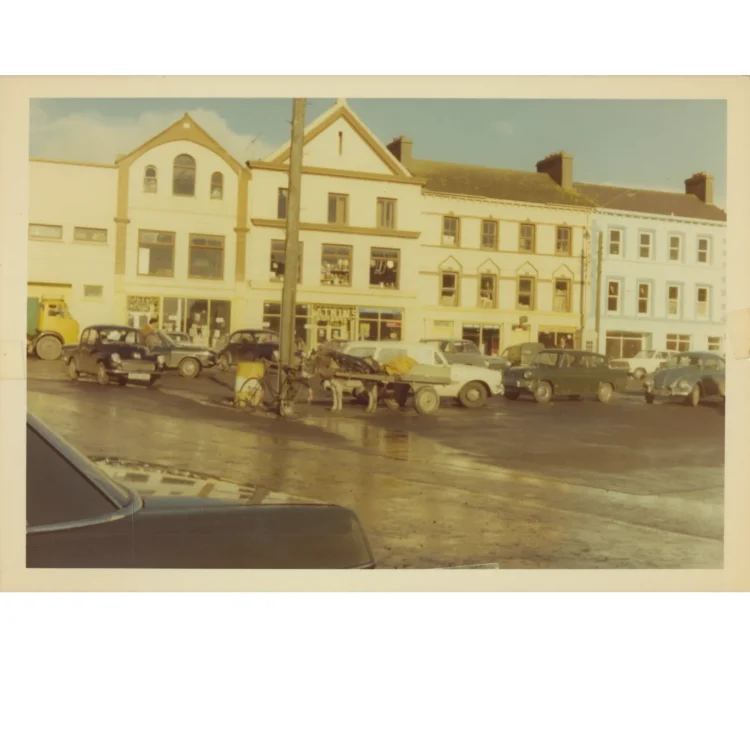
The Main street business next to High street dealt with almost anything imaginable except drapery : from grocery and hardware to furniture to cards to sales offices for shed erection, building materials and pumps. Most important was Santa before Christmas in the 1970s or 1980s! and most iconic the Lamson cash railway system.
Expansion to Cork city started in 1878 when a seed and agricultural merchants was opened in the South Mall. This venture grew into John Atkins & Co. Ltd., and now is one of Ireland’s oldest surviving companies, specialising in farm machinery, garden equipment and related products. The Atkins family helped modernise farming across Cork County and beyond, acting as a bridge between rural customers and new mechanical and horticultural technologies.
In 1974 the Atkins business in sold to James McMahons Ltd., of Limerick. It had 110 employees back then.
The President of University College Cork from 1954-1963 was a descendant of an Atkins relative who had worked in the Tanyard. At that time, John F. Atkins in Dunmanway had become intrigued by the potential of knowledge starting to emerge about the molecular basis of information in DNA specifically proteins that catalyse nearly all reactions and perform other roles in all known life. For many years, John has played a leading role in discovering and revealing various types of dynamic non-standard genetic decoding events that occur in probably all organisms. These events are collectively called Recoding, a word he co-coined in 1992 (now often called Translational Recoding). One of the many viruses to utilise Recoding is the Covid causative virus, and its utilisation by that virus can be specifically inhibited. John’s recoding work provided him the opportunity to perform wider roles in RNA biology. He has been co-editor of 5 major books on the topic including its implications for early life.
John was first Director of Life Sciences and Biotechnology for Science Foundation Ireland, and the first Royal Irish Academy Gold Medallist in the Life Science which is awarded every four years. He was the first Irish national to be elected as a member of the European Molecular Biological Organisation. His contributions to RNA virology were honoured with the name of a family of viruses normally present within all humans being named Atkinsviridae. He is an honorary Professor of Genetics at his alma mater Trinity College, Dublin. He co-commissioned and part-designed with Charles Jencks, the sculpture ‘What is Life?’ which was donated to the National Botanic Gardens in Dublin.
To download the full set of colouring sheets from the Dunmanway Stories on the Street Series, click here: