
Togher National School
Seán:
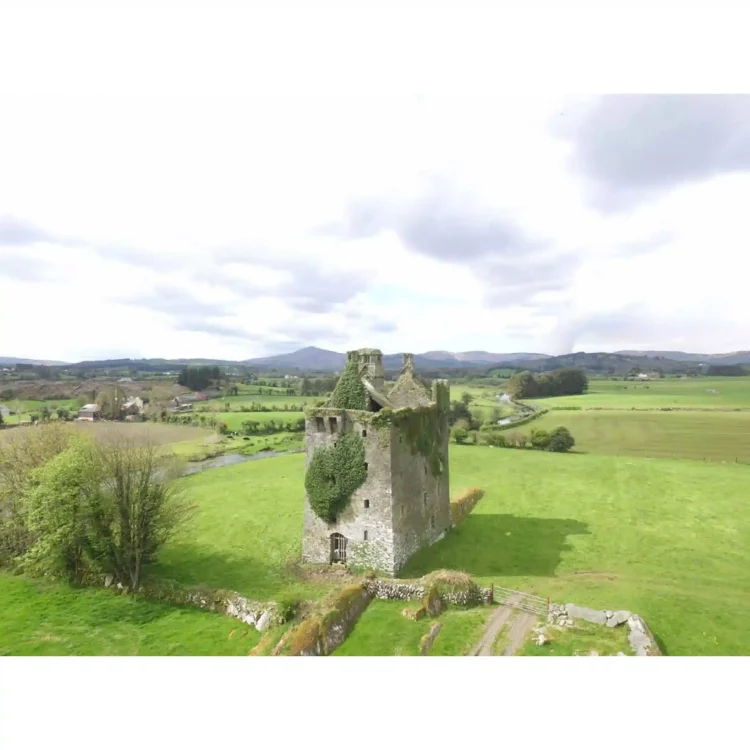
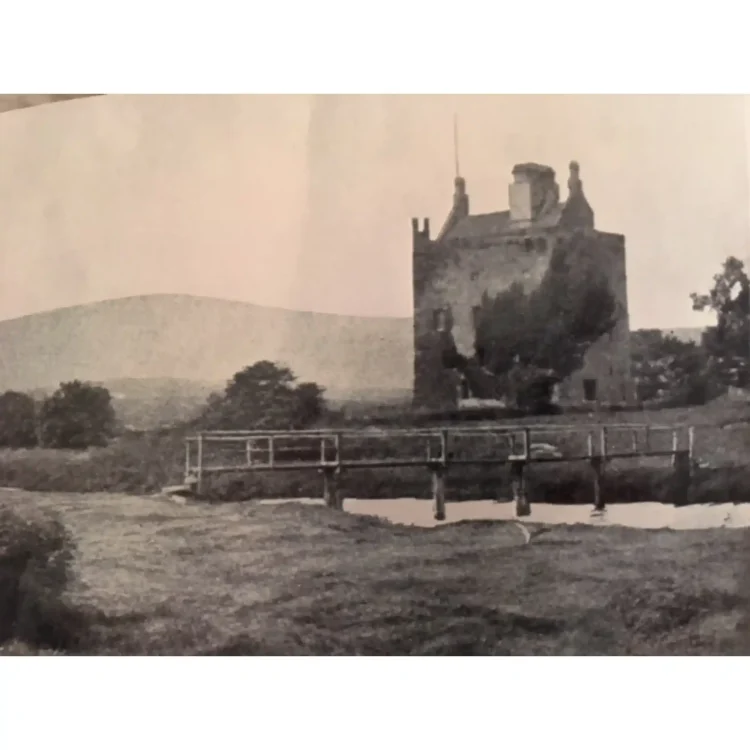
Wow, Ella, that talk from the historian about Togher Castle was so cool! It’s like the sister castle to Dunmanway Castle, just 10 kilometres north of Dunmanway town. Built in the 16th century by Tadhg an Fhorsa ,{Pronounced AN OR SA } the Chief of the MacCarthys of Gleannacroim. He got the lands through “surrender and regrant.”
Ella:
What was Surrender and Regrant again ?
Siobhán :
That was where the lands of the clan chieftains in Ireland were confiscated by the King or Queen and then given back once they swore allegiance to the Crown that’s the simple explanation. Can you remember what she said about it being a fancy tower house?
Ella:
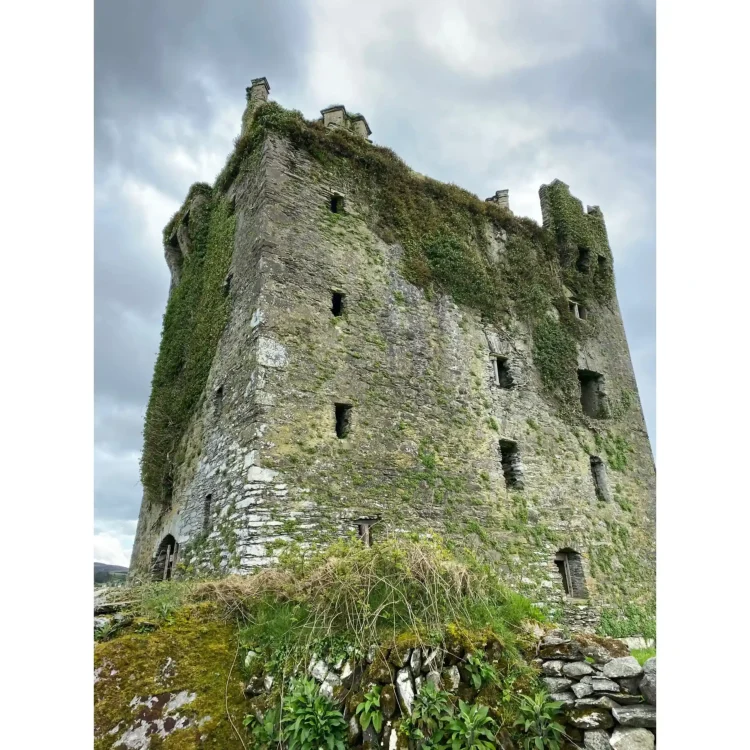
Yeah, Siobhán! It’s super tall with four storeys, and the stone masons made it look like the golden ratio—that cool maths thing where everything’s perfectly balanced. The entrance is on the east wall, and there’s a spiral stone staircase going all the way up. At the bottom, there’s this tiny room called “chambrin á chodaigh,” the tyrant’s little room. Ground floor was for food and animals.
Seán:
Right! The historian also said that the upper floors have pairs of windows on the north and south, and the second floor even has the remnants of a fireplace and a mantle with a big wide chimney stack. Reminds me of a medieval movie I saw that had a big banqueting hall and a huge fireplace in it. She said something about it having defences?
Ella:
It still has those defensive bartizans and machicolations {Ma Chic O lations} at the northwest and southeast corners – defenders could drop stones or hot stuff on enemies below. The MacCarthy’s were smart people to build it strong like that.
Siobhán:
Yes- I remember now, hot coals and hot tar !
Ella:
But then the bad times came. Cromwell confiscated it in 1641, and by 1667, the Hoare Brothers – who came with Ireton’s Army – got the castle and lands. After the Battle of the Boyne, some MacCarthy leaders fled Ireland and went to fight in France, when they got to France some of them set up wineries and vineyards in Bordeaux. Oh, and Angelina, daughter of Randal Og Hurley from Ballinacarriga Castle, married Cormac Glas MacCarthy – that’s how they made local friends – and allies.
Seán:
In the 1800s, Daniel MacCarthy Glas tried saving it by putting a corrugated iron roof from Liverpool on top—it lasted until a storm in 2015! He also had the MacCarthy Memorial Shield sculpted by Patrick J. Scannell from Cork in 1883. It’s still in the entrance lobby. And he wrote a Historical Pedigree about their family.
Ella:
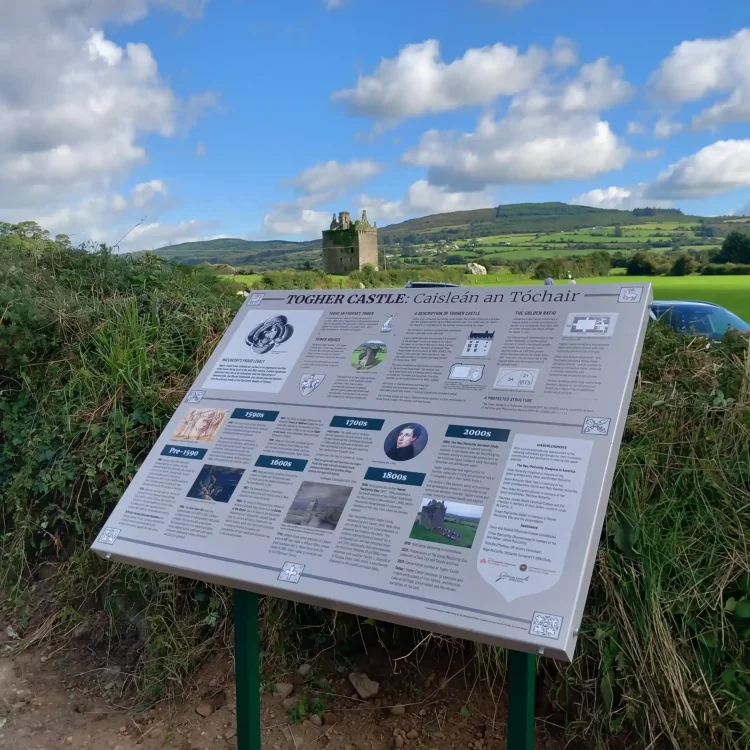
That’s so awesome! Now there’s an information panel near Togher Castle and she also said that the MacCarthy Clan members are buried in the medieval graveyard at Kilbarry near Castle Street. I wanna go visit Togher Castle – it still feels alive with all that history!
Siobhán :
Better bring an ipad or camera to take a picture of that information panel, the historian said it has a big timeline of information displayed on it.
Ella:
I think I know where that is located- it’s on the O’Donovan’s Farm . Let’s go explore some history.
Togher National School
Liam:
Sarah, that historian’s talk about Dunmanway Castle was amazing! It’s why Castle Street’s called is called that— a 15th-century tower house on the north bank of the Sally River by Castle Road. It was the main home of the MacCarthys of Gleannacroim, that’s the wider area around Dunmanway .
Ciara:
Imagine , there’s hardly anything left except stones that were reused to build a mill that’s now Cotter and Keane’s on Kilbarry Road. George Bennett wrote about the stones of the Castle in his 1869 History book, and local stories say so too.
Sarah:
Yeah! Local stories can grow legs. Some say Sir Richard Cox destroyed the castle in the 17th century using the stone to build his own mansion, or to build the Long Bridge over the River Bandon, and even the Market House in the Square – which got demolished in 1972.
Liam :
Well it must have been a big castle if there was that much stone to build so many other buildings from it.
Sarah:
The historian said the fancy cut stone came from near Kilbarry, not too far from the castle, the stone quarry must have been close as it would have taken ages back then to get stone across the countryside on horse and cart …. The poor horses and what they carried then.
Ciara:
You can still see remnants and markings at ground level in a farmer’s field near the river, but you can’t go there.
Liam:
It got confiscated in 1602 by George Carew, the Lord President of Munster, because Tadhg an Fhorsa fought in the Nine Years’ War.
Sarah :
Liam how did the historian pronounce his name again ?
Liam:
Tadhg an Fhorsa ? AN- OR -SA – He’s the same chieftain who built the sister castle at Togher also in the late 1500s! In 1615, Tadhg went through “surrender and regrant” with King James I again. He had to swear loyalty to the King and then get his land back.
Ciara:
When he died in 1618, Dunmanway went to his elder son, Tadhg an Duna (I)—”of the fortress” – and Togher to his younger son Dermod.
Sarah:
During the 1641 Irish Rebellion, Tadhg an Duna’s lands then got taken in the Cromwellian confiscations. By 1652, his widow Honor O’Donovan and youngest son Callaghan were still living in the castle.
Sarah:
The Poet Domhnall na Tuile praised Tadhg an Fhorsa for his hospitality with fine wines, beef, and his love for people – so they called him Tadhg na Féile, meaning “of the feast”!
Liam:
Féile – that a cool name to be called, and research says the old medieval graveyard at Kilbarry, not far off, might hold many MacCarthy burials from these sister castles. Togher’s is still an awesome ruin about 10 kilometres north of here. Dunmanway’s story is so wild—I wanna check out those ruins someday!
Togher National School
Narrator :
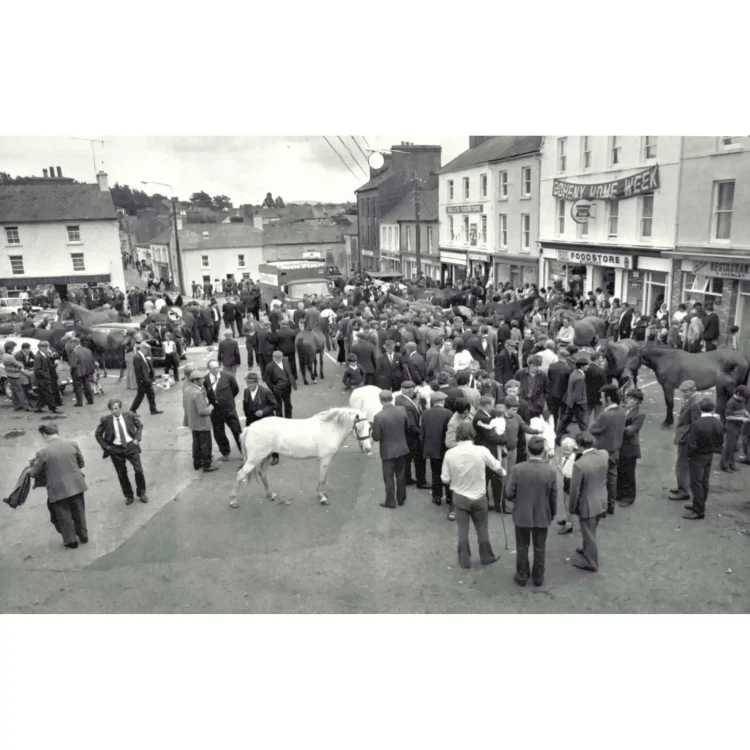
The scene is set at the Ballabuidhe Fair Day on a Wednesday afternoon in early August. Niamh, Aoife and Seán have groomed their ponies and are chatting about the history of the Ballabuidhe Horse Fair, Races and the festival,
Seán:
Look at the crowds arriving for Ballabuidhe Fair — it really does feel like Dunmanway’s great social occasion.
Niamh:
It has always had that reputation. Didn’t the Cork Examiner call Ballabuidhe the “Ascot of West Cork” back in 1937?
Aoife:
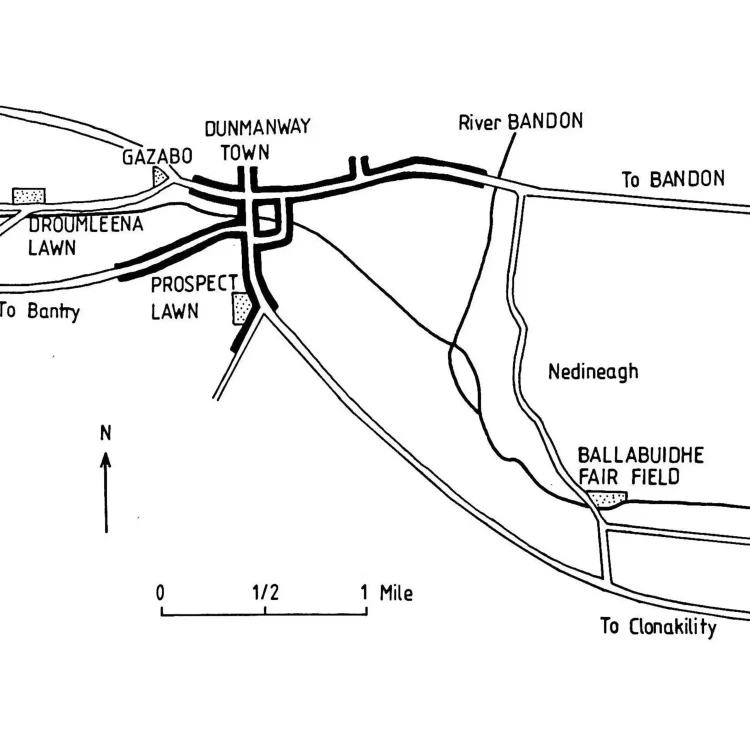
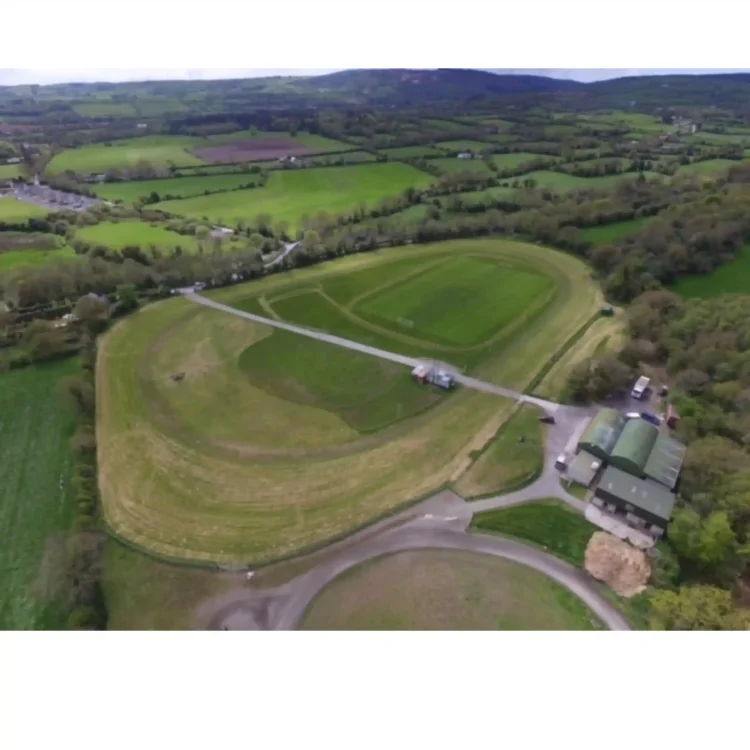
That sounds right. And it’s amazing how the fair has moved around over the years — from Ballyboy to the Gazabo, then Prospect Lawn, and finally to Droumleena Lawn Racecourse, with the horse fair in the Market Square.
Seán:
The atmosphere makes sense when you think of its long history. Ballabuidhe is one of Ireland’s oldest fairs, second only to the Lammas Fair in Ballycastle.
Niamh:
And its roots go way back too. The earliest record dates to 1615, when King James gave Randal Og Hurley permission to hold a fair on July 25th and the following day.
Aoife:
Even the name is beautiful — Ballyboy, or Béal Atha Buidhe, meaning “mouth of the yellow ford.”
Seán:
I’ve always liked that the fair may be even older than the patent suggests. Some people believe it goes back to the Lughnasa season, around late July and early August.
Niamh:
That makes sense, especially since the fair falls near the feast of St Christopher too, patron saint of travellers. It feels like a date meant for people on the move.
Aoife:
And it really was connected to travel and return. In August, Dunmanway’s diaspora came home from far-flung places, so the town would have been full of reunions .
Seán:
The Tuesday night Gathering must have added so much to that sense of community.
Niamh:
Definitely. And when the Welcome Home Committee worked alongside the Ballabuidhe Race Committee in the 1980s, Dunmanway even welcomed big names like Hollywood icon Maureen O’Hara.
Aoife:
That shows how the fair and festival tradition kept growing.
Seán:
The site itself was perfect for it too, with nature formed a kind of open air arena.
Niamh:
A grandstand for crowds and horses alike.
Aoife:
And the railway helped it grow even more. There was even a stop at Ballyboy in 1866, plus a siding and loading bank for horses.
Seán:
Then, when attendance declined, the fair moved in 1898 to the Gazabo near Castle Street, and by 1900 more than two thousand horses were coming to it. Imagine a fair with 2000 horses over a few days. Where did they put them ?
Niamh:
Later buyers started doing business in the streets, and the Wednesday Fair in the Square became part of the tradition too. I don’t think you could fit hundreds of horses there now!
Aoife:
By 1952, the Ballabuidhe Race Committee had bought Droumleena Lawn as a permanent ground.
Seán:
And today the tradition still continues with flat races, harness racing, and trotting.
Niamh:
So Ballabuidhe isn’t just history — it’s a living celebration of Dunmanway.
![Plaque No: File Name & Google Drive Link Add Information Caption Alt Text 5 Skibbereen__West_Carbery_Eagle_08_September_1917_0005_Clip.jpg The Skibbereen and West Carbery Eagle A 1917 report from the Skibbereen & West Carbery Eagle detailing the West Cork tour dates for John Duffy and Sons Circus, including their scheduled stop in Dunmanway on Tuesday, September 11th. A 1917 report from the Skibbereen & West Carbery Eagle detailing the West Cork tour dates for John Duffy and Sons Circus, including their scheduled stop in Dunmanway on Tuesday, September 11th. 5 Kilkenny_Journal_and_Leinster__20_April_1946_0001_Clip edit.jpg An advertisement for the John Duffy & Sons Circus tour, as printed in the Kilkenny Journal on 20th of April 1946. An advertisement for the John Duffy & Sons Circus tour, as printed in the Kilkenny Journal on 20th of April 1946. 5 Kilkenny_Journal_and_Leinster__10_November_1956_0003_Clip.jpg Kilkenny Journal The obituary of John Duffy, proprietor of John Duffy and Sons Circus, who passed away suddenly at the winter headquarters in Dunmanway while supervising preparations for the upcoming season. Printed in the Kilkenny Journal, 10 November 1956. The obituary of John Duffy, proprietor of John Duffy and Sons Circus, who passed away suddenly at the winter headquarters in Dunmanway while supervising preparations for the upcoming season. Printed in the Kilkenny Journal, 10 November 1956. 5 Irish_Independent_16_November_1950_0008_Clip.jpg Irish Independent An Irish Independent newspaper published 16th November 1950 report detailing the marriage of Lilian Duffy, "circus star" and youngest daughter of proprietor John Duffy, to Edward McFadden at St. Patrick’s Church. The celebration featured a guard of honour formed by clowns and a reception attended by 150 guests from the show world. An Irish Independent newspaper published 16th November 1950 report detailing the marriage of Lilian Duffy, "circus star" and youngest daughter of proprietor John Duffy, to Edward McFadden at St. Patrick’s Church. The celebration featured a guard of honour formed by clowns and a reception attended by 150 guests from the show world. 5 Irish_Independent_04_July_1957_0010_Clip (2).jpg An Irish Independent notice from July 1957 detailing the exotic new international lineup for the John Duffy & Sons Circus tour after wintering at their Dunmanway headquarters. An Irish Independent notice from July 1957 detailing the exotic new international lineup for the John Duffy & Sons Circus tour after wintering at their Dunmanway headquarters. 5 Armagh_Guardian_09_November_1956_0008_Clip.jpg An Armagh Guardian report on the sudden death of circus proprietor John Duffy at the family's winter quarters in Dunmanway, published 9 November 1956. An Armagh Guardian report on the sudden death of circus proprietor John Duffy at the family's winter quarters in Dunmanway, published 9 November 1956. 5 887987_887987.jpg Courtesy of The Irish Examiner "A black and white photograph of John Duffy Circus posed together outdoors on a grassy field in front of a circus tent. The group consists of approximately twenty-four performers, including men, women, and a small child, displaying a wide variety of circus attire. In the back row, several men stand dressed in formal evening wear, including dinner jackets and bow ties. The middle and front rows feature a diverse assortment of characters: a clown in a checkered suit and top hat, a person in elaborate, heavily decorated traditional robes, a shirtless strongman displaying his muscular build, a performer in striped overalls and thick spectacles, several women in patterned dresses or performance leotards, and a white-faced clown in an ornate, ruffled costume. A small girl in a light-coloured dress stands to the far left.In the lower foreground, two dalmatian dogs are present; one stands on the left while the other sits next to a seated man. A collection of brass musical instruments, including a tuba and trombone, lies on the grass alongside a large bass drum and a snare drum on a stand.The background features an ornate, painted wooden circus façade serving as an entrance archway, decorated with illustrations of horses inside horseshoes and central carriage imagery. Behind this structure stands a large, light-coloured canvas circus tent (big top)." 5 816160_816160.jpg Courtesy of The Irish Examiner A black and white photograph depicting a wet, industrial dockside setting on an overcast day. The central focus is on two large Asian elephants standing side-by-side on a cobblestone surface next to a pavement. The ground is highly reflective, showing puddles and dampness from recent rain.To the left, a group of approximately eight men stand on the pavement watching the animals. The men are dressed in vintage mid-20th-century attire, including long trench coats, heavy overcoats, bowler hats, flat caps, and trilbies. Several of them hold umbrellas. To the right of the elephants stands a lone handler wearing a light-coloured, belted trench coat and a dark hat, holding a walking stick or hook.In the background, the industrial landscape includes a large crane structure mounted on a framework, distant warehouse buildings, and water, suggesting a port or harbour location where the animals have likely just been unloaded. 5 811787.jpg Courtesy of The Irish Examiner A black and white photograph taken in John Duffy’s circus, showing a young child riding a small pony alongside an adult handler.The main subject is a fluffy, light-coloured Shetland pony standing in profile facing left. The pony is equipped with a dark leather bridle, reins, and a small saddle. Seated on the pony's back is a toddler or young baby, dressed in a thick, light-coloured winter coat and matching bonnet. The child is smiling and looking towards the right side of the frame.Standing directly behind the pony is a young man serving as the handler or trainer. He is dressed formally in a dark dinner suit, white shirt, and a dark bow tie, with a white pocket square visible in his breast pocket. He looks directly at the camera with a neutral expression. The background consists of a rustic wooden stable barrier or ring fence painted with light and dark triangular geometric patterns. The ground is covered in loose straw or hay, and heavy wooden support poles for a tent or barn structure are visible in the background. 5 148271_-1247773654.jpg Courtesy of The Irish Examiner A close-up black and white photograph featuring three clowns from John Duffy’s circus performing with musical instruments against a plain, dark canvas background.The clown on the left is wearing a dark, checked jacket with contrasting trim and a fedora hat. His face is painted with exaggerated eyebrows, a large nose, and lines around his mouth; he is winking one eye while playing a silver trumpet.The central clown stands slightly behind a large marching bass drum. He wears a dark top hat and features classic sad-clown white makeup around his eyes and a wide, painted-on downturned mouth. He holds a drumstick in his hand.The clown on the right is dressed in a light-coloured, textured suit jacket with a white shirt and a dark bow tie, topped with a light bowler hat. His face paint includes white patches around his eyes and mouth, a dark red bulbous nose, and heavy dark lines down his cheeks. He is actively playing a saxophone. 7 O Brien as Child with his parents - Image from his Memoirs - No Final Victories.jpg No Final Victories: A Life in Politics from John F. Kennedy to Watergate is the 1974 political memoir by Lawrence F. O'Brien A family portrait of a young Larry O'Brien taken from his memoir "No Final Victories: A Life in Politics from John F. Kennedy to Watergate is the 1974 political memoir by Lawrence F. O'Brien" 7 year old Larry is photographed with his mother, his sister Mary and his father. A black and white studio family portrait of Larry O’Brien posed against a dark, neutral backdrop. On the far left, Larry O’ Brien stands as a young boy stands facing forward, wearing a light-coloured, long-sleeved shirt with a wide collar and dark shorts or trousers that reach the knee, paired with dark socks and shoes. Seated next to him in a dark wooden chair is his mother facing forward with a calm expression. She wears a dark, loose-fitting dress with a long necklace.To her right stands his sister wearing a light-coloured, short-sleeved dress with dark, striped socks and dark shoes. She has a bow in her hair.On the far right, Larry O’Brien’s father sits facing slightly inward toward the family. He wears a dark three-piece suit consisting of a jacket, waistcoat, and trousers, with a stiff white shirt, a dark tie, and dark lace-up boots. 7 Headstone of Julia Sweeney (Aunt) & her parents (grandparents to Larry O Brien) - St Patricks Church.jpg The grave headstone of Larry O' Brien's grandparents and aunt Julia Sweeney A grey, weathered stone headstone of Larry O’ Brien’s grandparents and Aunt, Julia Sweeney’s grave positioned in an outdoor churchyard against a cloudy, overcast sky. The headstone features a symmetrical design with a central rectangular plaque topped by a stone cross. The cross has the stylised letters "IHS" carved into its base block. The central plaque is flanked by two decorative side pillars with geometric caps and carved floral or leaf motifs running vertically down their fronts. The stone shows significant dark weathering, lichen, and staining across its surface, particularly on the top and left sides. Green foliage and trees are visible in the soft-focus background. 7 Dunmanway Station 1959 Image Cork Digital Archive - Cork County Council.jpg A diesel railcar train stands at the platform of the bustling Dunmanway Railway Station in 1959, just a few years before the line's eventual closure. Photo courtesy of Cork Digital Archive, Cork County Council. A black and white photograph showing an active Dunmanway Railway Station from a low-angle perspective looking down the tracks.A diesel railcar train is positioned on the left set of tracks, facing directly towards the camera. The train has a large front window split into sections. To the left of the train, a stone station building with large windows and chimneys runs alongside the platform. A few indistinct figures, including individuals walking, are visible on the platform near the building.To the right, a second parallel track runs alongside an opposite platform, which features a small, simple passenger shelter and a larger goods shed or warehouse structure further in the background. A line of trees stands behind the structures on both sides under a clear, bright sky. 7 Cork Digital Archive- 1966 the derelict site of Dunmanway Railway.jpg The abandoned and overgrown site of Dunmanway Railway Station in 1966, shown after the closure of the line and the removal of the tracks. A black and white photograph depicting the deserted and derelict site of Dunmanway Railway Station in 1966. The landscape sits under an overcast sky.In the foreground, the ground where railway tracks used to run is uneven, covered in gravel, patches of weeds, and scattered debris, including a tangled coil of thick wire or cable on the left. An old, dark metal water crane or pump mechanism stands prominently near the centre of the frame where trains once stopped. In the mid-ground, the single-story, light-coloured station building with a dark roof stands empty and parallel to the abandoned platform. A tall wooden utility pole stands to the left of the building. To the far left, a low stone wall and a simple wooden fence separate the former station grounds from a dense line of mature trees. To the right of the station building, a small cluster of tall, dark pine trees stands against the pale sky. 7 Aunty Julia and Larry O'Brien at Cork City Hall 1963 - Courtesy of Dunmanway Historical Assoc..jpg American political strategist Larry O'Brien shares a smile with his maternal aunt, Julia Sweeney, outside Cork City Hall during his visit in 1963. Photo courtesy of Dunmanway Historical Association. A colour photograph capturing a candid moment between American political strategist Larry O'Brien and his maternal aunt, Julia Sweeney, standing outdoors next to a stone pillar at Cork City Hall during a visit in 1963.On the left, Julia Sweeney stands facing right, smiling warmly at her nephew. She wears a structured, light beige or cream-coloured tweed coat that falls below the knee, featuring prominent brown buttons. Her outfit is completed by a matching folded fabric hat, white gloves, and brown, low-heeled shoes. She holds a small white paper or card in both hands and has a dark brown leather handbag tucked under her left arm.On the right, Larry O'Brien stands facing left, looking down at his aunt with a smile. He wears a dark, pinstriped navy or charcoal suit with a white shirt, a dark patterned tie with white polka dots, a white pocket square, and dark dress shoes. He also wears his characteristic thick-rimmed glasses.In the background, a man in a dark suit and a woman with grey hair wearing glasses are partially visible, looking toward the pair. The architectural setting consists of the large, light-grey stone blocks and a classic column base of Cork City Hall on the far left. 8 Skibbereen__West_Carbery_Eagle_19_August_1911_0005_Clip.jpg A newspaper article from the Skibbereen and West Carbery Eagle dated 19th August 2011 outlinig the Model Schools Athletic Sports fixture which was promoted by Frank Beamish This image is a close-up photograph of a vintage newspaper article, presented in black and white text against an off-white background. The snippet is arranged in two vertical columns of dense, justified print typical of early 20th-century news formatting.The main heading spans across the top left portion of the clipping in a bold, sans-serif, all-capitalised typeface. A smaller sub-heading appears directly beneath it in parentheses.The body text is set in a standard, slightly worn serif typeface, showing small imperfections, slight ink bleeding, and minor alignment variations characteristic of traditional letterpress printing.Transcribed Text: Column 1 DUNMANWAY MODEL SCHOOLS ATHLETIC SPORTS (From our Reporter.)The annual Model Schools Athletic Sports fixture was held on Tuesday last, in a field kindly lent for the event by Mr. Robert Meara, victualler, Dunmanway. The day was glorious, and all the events were well contested. The promoter, Mr. Frank Beamish, who is himself a popular sportsman, undoubtedly deserves a lot of credit for encouraging a love of athletics in the children under his tutelage and fostering this popular juvenile athletic fixture. Before the sports, the guests were entertained by Mr. Beamish in the Model Schools to tea, etc. The Rev. A. Wilson, Rector, presided. He welcomed the guests, and hoped they would enjoy themselves as much at the sports this year as they did on previous occasions.Mr. Beamish reviewed the year's work. He said he was glad to inform the parents of his pupils and their friends present that the school still maintained its high place in the educational world, as recent successes would show. To the training college—Denis Riordan, Jerry McCarthy, Frank Healy, Jerh. and P. Cummins; also 7th place in the United Kingdom Customs; 1st place Customs in Ireland. He hoped their scholars would be as successful in future as they have been in the past. (Applause.) The senior pupils next gave a very nice display of drill. The party then adjourned to the sports field. The following is a list of the competitions and the result:—Running (boys under eight)—Victor Beamish, 1st; Georgie Beamish, 2nd; W. Deane, 3rd.Running (boys) 8 to 11 years—Jack Payne, 1st; Tom Deane, 2nd; Cecil Anderson, 3rd.Running (boys) 11 to 14 years—Cecil Anderson, 1st; Tom Deane, 2nd.Running (boys) over 14 years—W. Deane, 1st; M. Maranould, 2nd; George Clarke, 3rd. Running (girls) under 8 years—Muriel Atkins, 1st; Martha Clarke, 2nd; Fanny Meara, 3rd. Running (girls) 8 to 11 years—Nellie Donovan, 1st; Geraldine Crowley, 2nd; Mary Jane Kingston, 3rd.Running (girls) 11 to 14 years—Emily Meara, 1st; Violet Kingston, 2nd; Minnie Deane, 3rd.Running (girls) over 14 years—Ethel Jagoe, 1st; Fanny Meara, 2nd; Emily Meara, 3rd.Wheelbarrow Race (boys)—Georgie Beamish, 1st, John O'Neill, driver; W. Deane, 2nd, Young Deane, driver; Jack Payne, 3rd, Jack Kingston, driver.Siamese Race (girls)—Susie F. and Susie Deane, 1st; Emily Meara and Minnie Deane, 2nd; Bubly Gillman and Eileen Taylor, 3rd.Column 2 Cycle race open to past and present pupils—T. J. Fuller, 1st; Jerh. Buckley, 2nd; Jerh. Ronayne, 3rd.The Rev. Chairman distributed the prizes to the various winners.The following prizes were also distributed by the Chairman, who congratulated each pupil on their success:—Silver medals to the following—J. T. O'Neill (subject mathematics 100%); Valentine Tomkins (drawing and science 98%); Harry Buttimer (writing 95%); Agnes Harrington (science note-book 90%). The prizes of the recent temperance examination were next distributed to all denominations. All-Ireland, Hewitt Wilson, 98% (silver medal). The following received valuable books as prizes—Valentine Tomkins, 97%; Jerh. Buckley, 93%; J. F. O'Neill, 91%; Susan F. Deane, Mary Deane, Cecil Anderson, Walt. Atkins. The following got framed certificates—John F. O'Neill, Reggie Atkins, Walter Atkins, Minnie Deane, Edrie Anderson, Harry Buttimer, Francis V. Beamish, Mary J. Lovekins, Cecil Anderson, Jerh. T. Cummins, Patrick Cummins, Violet Kingston, Mary Deasy, Annie McCarthy, Percy Clarke, George Clarke, George Kingston, Cissie Lovekins, Elizabeth Meara, John Deane, Birdie Matthews, Jerh. Hurley, Elizabeth Deane, Patrick Holland. Popularity Prize (open ballot)—Hewitt Wilson (boy); Violet Kingston (girl); Lizzie Deane (girl).After the distribution, Rev. M. A. Wilson, Chairman, proposed a hearty vote of thanks to Mr. Beamish.Mr. T. R. Bryan seconded, and Mr. Popham supported, after which three hearty cheers were given for Mr. Beamish.Mr. Beamish, in responding, thanked the pupils for the whole-hearted support they had given him; he also thanked Mr. Meara for giving his field for the occasion; he said he was also very grateful to the donors of prizes for the different events—Messrs. F. Fitzmaurice, Popham, T. R. Bryan, and G. A. Bryan. This concluded a very enjoyable day, and as we wended our way homewards all seemed satisfied. 8 Newark_Advertiser_26_February_1936_0005_Clip.jpg A singular news snippet from the Newark Advertiser dated 26th February 1936 about the attendance of Charles Beamish at annual rugby dinner. A small, close-up black-and-white scan of a singular news snippet from the Newark Advertiser dated 26th February 1936. The column is titled "INTERNATIONALS AT RUGGER DINNER." The text consists of a single bold headline, a centered separator line, and two paragraphs of newsprint text.Transcribed Text: INTERNATIONALS AT RUGGER DINNER. Next Saturday night, at 6-45, the Newark Rugby Football Club will hold at the Robin Hood Hotel their second annual dinner, and several notable Rugby men will be among those present when the President (Mr. Alex Basker) takes the chair. Prominent among those who have accepted invitations are Charles E. Beamish, the famous Irish International forward, who plays for the R.A.F. and Leicester, and has ten times been honoured by his country; S. G. ("Ranji") Walker, R.A.F., Leicester, and Three Counties, who has three R.A.F. caps to his credit; D. Craven (R.A.F. and Lancashire) and M. C. R. White the Royal Air Force and Combined Counties forward.Tickets of members of the committee, 4/- each. 8 Gloucester_Citizen_01_April_1942_0001_Clip.jpg A black-and-white scan of the column from The Gloucester Citizen, dated 1 April 1942 detailin the news of Francis Beamish missing in action A black-and-white scan of two adjacent newspaper columns from The Gloucester Citizen, dated 1 April 1942. The left column details the news of Francis Beamish missing in action, while the right column covers a story regarding a missing naval destroyer captain from the St. Nazaire raid. Transcribed Text: FAMOUS R.A.F. "ACE" MISSING.ONE OF "FLYING BEAMISH BROTHERS”.GROUP CAPTAIN F. V. BEAMISH, D.S.O. AND BAR, D.F.C., A.F.C., ONE OF THE "FOUR FLYING BEAMISH BROTHERS," AND AT 39 STILL ONE OF BRITAIN'S BEST FIGHTER PILOTS, IS REPORTED MISSING. THE NEWS HAS BEEN RECEIVED AT COLERAINE, NORTHERN IRELAND, WHERE HIS MOTHER LIVES.Group Captain Beamish was credited with being one of the two Spitfire pilots who, after fighting off a host of Messerschmitts, got back to report that Scharnhorst and Gneisenau were making their dash up the Channel.Last week he led an R.A.F. Wing which destroyed seven enemy planes in an attack on Le Havre, shooting down two of them himself. On March 23 he marched at the head of the R.A.F.—W.A.A.F. contingent in the city procession for London's Warship Week. Born at Dunmanway, Cork, Group Captain Beamish was commissioned in the R.A.F. in 1923 and was awarded the A.F.C. in 1938. He retired from the R.A.F. in 1933 but returned to the service when the expansion programme began.From 1929 to 1931 he was lent for duty with the Royal Canadian Air Force and later became personal assistant to the late Air Marshal Sir Geoffrey Salmond at Uxbridge. When he was awarded the D.S.O. in July, 1940, for gallantry in flying operations against the enemy, the official announcement said that "his outstanding leadership and high courage had inspired all those under his command with both energy and dash." Group Captain Beamish fought in the Battle of France and the Battle of Britain and the number of enemy planes shot down by the squadrons he led probably runs into hundreds. Like his brothers, Group Captain Beamish was a keen Rugby player, getting an Irish trial cap and he has also played for the R.A.F. against both the Army and Navy.The other three Beamish brothers are Group Captain George Beamish, the Irish Rugby international wing, Commdr. Charles Beamish, D.F.C., who is also an Irish Rugby international, and Flight-Lieut. Cecil Beamish, who is in the dental branch of the R.A.F. 8 Evening_News_London_01_April_1942_0004_Clip.jpg A full page of The Evening News newspaper from Wednesday, 1 April 1942 including the article about the missing Francis Beamish. A full page of The Evening News newspaper from Wednesday, 1 April 1942. The layout features dense columns of text, multiple wartime headlines, editorial sections, commercial advertisements (such as "K.L.G. Sparking Plugs", "Schweppes Soda Water", "Daisy" tablets), financial tables, and sports listings ("Unity Pool" coupon on the right).Near the top-left of the page is the specific column regarding "A 'Flying' Beamish is Missing”. 8 Evening_News_London_01_April_1942_0004_Clip (2).jpg A close-up of a news column from The Evening News, dated 1 April 1942 about Francis Bemish being missing after failing to return to his base after taking part in operations over the Channel. A black-and-white archival close-up of a news column from The Evening News, dated 1 April 1942. The column features a large headline about a missing pilot, accompanied by a small, grainy portrait photograph of a man in an RAF uniform jacket and tie, looking slightly to the right. The text continues below the photo under a sub-headline.Transcribed Text: A "Flying Beamish is Missing”.Group-Captain Francis V. Beamish, D.S.O. and bar, D.F.C., A.F.C., who led the R.A.F. contingent in the London Warships Week procession a week ago today, is missing. He failed to return to his base after taking part in operations over the Channel.Last Tuesday he led his wing in the daylight raid on Havre. He shot down two enemy fighters himself, other pilots in his unit shooting down five more.Group-Captain Beamish is credited with being one of the two Spitfire pilots who, after fighting off Messerschmitts got back to report that the Scharnhorst and Gneisenau were making their dash up the Channel. He fought in the Battle of France and the Battle of Britain.Group Captain Beamish, who is 39, is one of the "Four Flying Beamish Brothers." The A.F.C. was given him in 1938, after 15 years' service in the R.A.F., to which he returned at the outbreak of war after retiring.He was awarded the D.S.O. in July, 1940, the D.F.C. in November, 1940, and a bar to his D.S.O. six months later.Group Capt. Beamish played Rugby for the R.A.F. against both the Navy and the Army. His brothers are Wing Commander Charles Beamish, D.F.C., Wing Commander George Beamish and Flight-Lieut. Cecil Beamish, who is in the R.A.F. dental branch. George and Charles are Irish international Rugby players, Cecil has played for the R.A.F.Their mother, who lives at Coleraine, Northern Ireland, was expecting Group Capt. Beamish home for Easter. 8 Belfast_Telegraph_01_November_1940_0007_Clip.jpg A newspaper clipping form the Belfast Telegraph dated 01st November 1940 after the D.F.C was awarded to Francis Victor Beamish. A narrow, vertical black-and-white scan of a newspaper column clipping. The top features a bold uppercase sub-headline, followed by several paragraphs of biographical and military text regarding an RAF officer and his family. Transcribed Text:MEMBER OF NOTED RUGBY FAMILY.The D.F.C. has been awarded to Wing Commander Francis Victor Beamish, Acting Flight Lieutenant Robert Wardlow Oxspring, and Pilot Officer Crelin Arthur Walford Bodie.The D.F.M. has been given to Sergeant William Thomas Edward Rolls.The D.S.O. was awarded to Wing Commander Beamish on July 19.He and his two brothers were educated at Coleraine Academical Institution and he is 33 years of age.He was mentioned in despatches last March and received the Air Force Cross in 1938 when he was in command of the No. 2 armament training camp at Aldergrove. He has played Rugby football for the R.A.F. and in an Irish international trial match in 1926-27.He was lent to the Royal Canadian Air Force from 1929 to 1931, and later became personal assistant to the late Air Marshal Sir Geoffrey Salmond.In 1933 he retired, but he returned to the R.A.F. when the expansion programme began.His brother, Squadron-Leader Charles E. Beamish, was awarded the Distinguished Flying Cross in May. He, too, is a well-known Rugby player, having played for N.I.F.C., and represented Ireland on 12 occasions.The third brother Squadron-Leader George Beamish, played Rugby for Ireland in 22 matches. 8 Belfast_NewsLetter_20_July_1940_0003_Clip.jpg A newspaper clip from the Belfast Newslettter dated 20th July 1940 confirming that Francis Victor Beamish was awarded the D.S.O for gallantry in flying operatins against the enemy. A black-and-white archival scan of a newspaper article clipping. The article consists of a prominent bold headline followed by a dense, single column of historic print text detailing military awards and sports achievements.Transcribed Text: Wing Commander F. V. Beamish. Wing-Commander Francis Victor Beamish, A.F.C., has been awarded the D.S.O. for gallantry in flying operations against the enemy, it was announced last night.Wing-Commander Beamish took over command of a Royal Air Force station after two squadrons there had been intensively engaged in successful fighting operations over France for thirteen days, and personally led them on many patrols against the enemy. In June, during an offensive mission over France, six Messerschmidt 109's were destroyed, two of them by Wing-Commander Beamish himself, and twelve were driven off. 8 Belfast_NewsLetter_08_June_1944_0003_Clip.jpg A newspaper clip from the Belfast Newsletter dated 08th July 1944 about the Beamish Family with a focus on George Beamish. A black-and-white scan of a single-column newspaper clipping containing five short paragraphs of printed text. The typography is a classic serif font typical of mid-20th-century newsprint. The paper texture shows slight degradation and minor dark flecks consistent with historical microfiche or archival scans. Transcribed Text " Air Commodore George Beamish, C.B.E., A.D.C., who becomes a Companion of the Bath and is mentioned in despatches, is a member of the well-known Coleraine family, all of whom are in the R.A.F.His brothers are Group Captain Charles Beamish and Squadron Leader Cecil Beamish. Both his sisters, Eileen and Kathleen, are dental surgeons in the R.A.F., and hold the rank of flight-lieutenant. Group Captain Victor Beamish, another brother, was reported missing, presumed killed, on operations. One of Ireland's outstanding Rugby players, Air Commodore Beamish holds the proud record of 22 international "caps." 8 Sams Grave.jpg Sam Maguire's grave in St Mary's Church of Ireland, Dunmanway. A wide, eye-level outdoor shot depicts the Maguire family burial plot enclosed by a low, grey stone border filled with fine grey gravel. The plot contains three prominent white marble and grey stone headstones situated in a green graveyard under a bright blue sky with scattered white clouds. Left Headstone: A tall, white marble monument with a decorative arched top featuring a relief carving of an anchor inside a circle. The main body of the stone is rectangular and bears an engraved inscription. Centre Headstone: A tall Celtic cross made of grey stone, adorned with intricate, traditional interlaced knotwork carvings along its shaft and face. It stands on a multi-tiered, tapered base. The front face of the base features a smooth white marble plaque with an engraved inscription. Right Headstone: A white marble headstone with a decorative, curved top mirroring the style of the left monument, featuring engraved text across its front face.In the background, there is a vibrant green lawn with several other scattered historic headstones, bounded by a low cream-coloured wall and residential buildings with slate roofs under a bright sky. 8 Sams Grave Close up of inscription - St Mary's Church of Ireland, Main Street.jpg A close up of the inscription of Sam Maguire's Grave in St Mary's Church of Ireland, Dunmanway A close-up, tightly cropped photograph shows the rectangular white marble inscription plaque set into the tapered grey stone base of the Sam Maguire’s Grave. The stone has subtle grey veining running through it. The clean, serif capital letters are engraved directly into the stone and highlighted with dark paint for legibility. The bottom line of text is written in a traditional Irish uncial script. Transcribed Text ERECTED TO THE MEMORY OF SAMUEL MAGUIRE OF MALLABRACA WHO DIED 6TH FEBRUARY 1927 BY THE PEOPLE OF DUNMANWAY AND HIS NUMEROUS FRIENDS THROUGHOUT IRELAND AND ENGLAND IN RECOGNITION OF HIS LOVE FOR HIS COUNTRY. AR deis Dé go raibh a anam 8 Ireland v England 1936 - Charles Beamish 3rd from Right second row seated, Beamish Collection.JPEG The Irish International Rugby Squad from 1936 that played against England. Charles Beamish is third from the right, second row seated. A black-and-white, vintage team photograph of an Irish international rugby squad from 1936, mounted on a historical display board. The image features nineteen men posed in three rows against the brick wall of an old stadium or pavilion building. Charles Beamish is the 3rd from right, second row seated. The players wear dark jerseys with a shamrock crest on the left breast, light-coloured shorts, and dark socks. Several individuals in the back row and on the far right stand wearing formal suits or blazers. The man sitting in the center of the middle row holds a vintage leather rugby ball.At the bottom of the mount, there is cursive handwriting in black ink identifying the match. 8 Image.PNG General Dwight D. Eisenhower presented George Beamish with the U.S. Legion of Merit in 1944 for his exceptionally meritorious service and close cooperation with Allied forces during the Mediterranean and North African campaigns A black-and-white photograph mounted on a cream-coloured card board. The photograph depicts an outdoor military decoration ceremony in 1944.On the left, General Dwight D. Eisenhower is seen in profile from the waist up, wearing a service cap and dark winter uniform coat with stars visible on his shoulder strap. He is smiling and shaking hands with an RAF officer on the right, identified by the caption as George Beamish.George Beamish is wearing an RAF service dress uniform with pilot wings and medals pinned to his left chest pocket, smiling broadly back at Eisenhower. In the background between them, two other military personnel stand in a row at attention. Below the print, a clean white label strip contains printed black text detailing the event. 8 DSC01763 (1).JPEG Plane in Dunmanway Historical fighter aircraft similar to that flown by the Flying Beamishes. A close-up of a full-scale replica or restored historical fighter aircraft, painted in a military green and grey camouflage scheme. The aircraft is parked outdoors on a grey herringbone-patterned brick pavement in the Square in Dunmanway.The side of the fuselage prominently features the large, white letters VF to the left of a classic Royal Air Force (RAF) roundel target symbol (consisting of concentric rings of yellow, blue, white, and a red center). To the right of the roundel is a large, white letter B, followed further back towards the tail by the serial number W3649 in black text.The cockpit canopy is visible, showing a clear windscreen structure. On the front section near the cockpit, the word Listowel is written in a white script font. A section of dark green camouflage netting is draped over the wing root on the left side.In the background, across the square, is a row of multi-storey town buildings . The buildings include a red-brick structure with white window frames and an inscription for "AIB Bank", and a bright yellow building next to it featuring commercial signage. A white temporary barrier stands on the pavement behind the aircraft. 8 DSC01750.JPEG Plane in Dunmanway Historical fighter aircraft similar to that flown by the Flying Beamishes. A close-up, side-angle view of a full-scale replica or restored historical fighter aircraft, painted in a military green and grey camouflage scheme. The aircraft is parked outdoors on a grey herringbone-patterned brick pavement in the Square in Dunmanway.The side of the fuselage prominently features the large, white letters VF to the left of a classic Royal Air Force (RAF) roundel target symbol (consisting of concentric rings of yellow, blue, white, and a red center). To the right of the roundel is a large, white letter B, followed further back towards the tail by the serial number W3649 in black text.The cockpit canopy is visible, showing a clear windscreen structure. On the front section near the cockpit, the word Listowel is written in a white script font. A section of dark green camouflage netting is draped over the wing root on the left side.In the background, across the square, is a row of multi-storey town buildings . The buildings include a red-brick structure with white window frames and an inscription for "AIB Bank", and a bright yellow building next to it featuring commercial signage. A white temporary barrier stands on the pavement behind the aircraft. 8 DSC01719.JPEG The LeGion of Merit awarded to Charles Beamish A front-on, close-up photograph shows a framed, rectangular military award certificate (Legion of Merit) presented on slightly aged, off-white paper. The document is mounted inside a simple, thin black frame against a plain white wall.At the top centre of the certificate, there is a coloured illustration of the United States Legion of Merit medal suspended from a wavy red ribbon with white borders. Small, faint five-pointed stars are printed in the upper left, upper right, lower left, and lower right corners of the page border. At the bottom centre, a circular, embossed official seal of the United States War Office is visible. Two handwritten signatures in dark ink appear at the bottom, one on the left and one on the right, above printed titles. Transcribed TextTHE UNITED STATES OF AMERICA TO ALL WHO SHALL SEE THESE PRESENTS, GREETING: THIS IS TO CERTIFY THAT THE PRESIDENT OF THE UNITED STATES OF AMERICA IN ACCORDANCE WITH THE ORDER ISSUED BY GENERAL GEORGE WASHINGTON AT HEADQUARTERS, NEWBURGH, NEW YORK, ON AUGUST 7, 1782, AND PURSUANT TO ACT OF CONGRESS, HAS AWARDED THE LEGION OF MERIT Degree of Officer TO Group Captain Charles Beamish, Royal Air Force FOR EXTRAORDINARY FIDELITY AND EXCEPTIONALLY MERITORIOUS CONDUCT IN THE PERFORMANCE OF OUTSTANDING SERVICE GIVEN UNDER MY HAND IN THE CITY OF WASHINGTON THIS 27th DAY OF February 1946 RECORDED IN THE OFFICE OF [Signature: Edward F. Witsell] Major General The Adjutant General [Signature: Robert P. Patterson] Secretary of War 9 Photo 2 Ballabuidhe fair in the 1970s.jpg Ballauidhe Fair in the 1970s. A black-and-white archive photograph captures Ballabuidhe fair in Dunmanway with numerous people and several horses. The town features multi-storey buildings lining the streets.In the foreground, a prominent white horse stands side-on facing right, held by a man amongst a small cluster of onlookers. Surrounding this central group, several other people in dark suits, coats, and flat caps are gathered across the concrete square. Multiple dark-coloured horses are distributed throughout the crowd, some tethered and others being led by attendees.In the background on the right, a large fabric banner is strung across the upper facade of a three-storey building. Below the banner, shopfronts display large glass windows. Additional town houses, parked cars, and a delivery van are visible further back under an overcast sky. 9 Old Black and While of Togher Castle.JPG Old black and white photo of Togher Castle A vintage, grain-textured black-and-white photograph depicts a tall, historic stone castle tower house standing in a rural field.The rectangular castle features small windows, defensive battlements at the roofline, and a tall flagpole mounted on its top corner. A heavy growth of dark ivy covers a significant portion of its front-facing wall. In the foreground, a rustic wooden footbridge with simple railings spans across a narrow, calm river that reflects the sky. The surrounding terrain consists of grassy banks, scattered trees to the left and right, and a soft, low mountain range rising gently in the distant background under a pale sky. 9 IMG_2022.jpg Ground view of Togher Castle Togher Castle from the ground A low-angle, close-up photograph captures the rugged stone facade of Togher Castle under a cloudy, grey sky. The impressive multi-storey square tower house is constructed from weathered grey stone blocks with visible mortar. Patches of green moss, lichen, and dense ivy cling to the upper corners and roofline battlements. The wall features several small, narrow vertical arrow slits and irregular window openings distributed across its height. In the immediate foreground, a low, crumbling drystone wall built from loose grey stones runs horizontally, topped with green grass, wild weeds, and small leafy plants. 9 Fig6 Locations of Fair (1).jpg A schematic line map of the locations of Ballabuidhe fair. A clean, black-and-white schematic line map illustrates the geographic layout and historical event locations near Dunmanway Town. The map features simplified roads rendered in solid black and thin double lines, accompanied by sans-serif textual labels.A stylised compass arrow pointing north is situated on the left side. At the bottom centre, a simple linear scale indicates distance up to 1 mile. The River Bandon is depicted as a thin, meandering line crossing from the upper right toward the lower centre. Four specific event zones are marked with distinct stippled rectangular boxes, including one labelled on the far right along the riverbank. 9 Droumleena Lawn Racefield (Courtesy of Finbarr Browne).jpg A drone photograph of the Droumleena Lawn Racefield (courtesy of Finbarr Browne). A high-angle, wide aerial drone photograph captures a green sports and racing complex surrounded by rural farmland. The central feature is a large, oval-shaped grass racetrack showing lighter green and straw-coloured texturing along the path. Enclosed within the oval track is a well-maintained, bright green rectangular football pitch with white goalposts visible at each end. A narrow grey asphalt access road bisects the oval field diagonally from the upper left to the lower right. In the lower right corner, a cluster of green-roofed agricultural or club utility buildings stands next to a small parking area with a few vehicles. The surrounding landscape consists of rolling green fields, dense hedgerows, and distant low hills under a soft, overcast sky. 9 Drone of Togher F Brown.jpeg A drone photograph of Togher Castle (courtesy of Finbarr Browne). An aerial drone photograph shows Togher Castle standing in a wide, sunlit green field. The square stone tower house is positioned centrally, with thick curtains of green ivy cascading down its left and upper walls. The roof structure is open and partially ruined, exposing the interior stone dividers. A clear shadow of the tower stretches across the bright green grass to the right. In the foreground, a stone wall with a small metal gate opens onto a dirt track that leads toward the castle. The background reveals a vast, rolling landscape of hedgerows, cultivated green fields, a winding river, a small cluster of farm buildings on the left, and distant blue-grey mountains under a bright sky with scattered white clouds. 9 Ballabuidhe Book A5 Cover_RTP.jpg Book about Ballabuidhe This image shows a full book jacket layout of a book about Ballabuidhe, encompassing the back cover on the left and the front cover on the right, separated by a dark central spine. The design features an amber and brown textured, antique-style parchment background. Front Cover (Right): Features large, stylised dark text with a weathered finish for the main title. The subtitle is printed below in a clean, sans-serif all-caps font. The author's name is presented inside a solid dark red horizontal bar with a white border. The bottom portion features a cropped, sepia-toned version of a historical market scene. Back Cover (Left): Contains a block of justified black text describing the book's contents and the author's biography. Below the text is a light graphic map outline with dotted trails and labels. The lower section displays a historic, monochrome panoramic illustration of a large crowd gathered in an open field, with a standard barcode and ISBN numbers printed on a white rectangle at the bottom centre. 9 20230816_165609.jpg Togher Castle Information Point The information point near Togher Castle with the castle in the background A wide shot shows a large, rectangular metal information display sign mounted on green posts in front of Togher Castle. The sign's surface is covered with comprehensive printed text columns, historical illustrations, timelines, maps, and photographic panels detailing the history of Togher Castle. The actual stone ruin of Togher Castle is visible in the distant background, centered right above the top edge of the sign, nestled amongst rolling green hills and fields under a blue sky filled with white clouds. On the left, the sign is bordered by thick green bushes and wild brambles, while a dirt path runs along the bottom left corner.](https://dunmanwayhistoricalassociation.ie/wp-content/uploads/elementor/thumbs/Plaque-9_Ballabuidhe-Book-scaled-roethrai70og1wx8o5gjitk5ud5wwfk98k6jbt0bt8.webp)
To download the full set of colouring sheets from the Dunmanway Stories on the Street Series, click here: