
When Railways were first suggested for Ireland in the 1820’s they were intended to be between cities rather than the rural areas. It took many years before West Cork would be linked to Cork City by rail. Prior to the famine, West Cork was difficult to access, roads we are familiar with today, did not exist. Many were built during the famine under the board of works schemes. Terrain was hilly, rough and not suitable for walking or even travelling by horse or carriage. Coastal travel from town to town was often preferable. From 1836 onwards many committees were formed that eventually saw a rail infrastructure extend to West Cork’. Viaducts and tunnels were built; the tracks were laid. In May 1866, the independent Cork and Macroom Direct Railway opened. Around the same time, The West Cork Company’s line from Bandon to Dunmanway was nearing completion. The first sod was turned by Lord Carbery in June 1863 using a silver handled spade and a specially engraved wheelbarrow for the occasion.
There were three sections of the West Cork Railway to be completed by 1866, Bandon to Ballineen, Ballineen to Dunmanway and Dunmanway to Skibbereen. It took longer than anticipated to complete the section to Dunmanway. Trains first ran to Dunmanway on 1st May 1866 but the official opening did not take place until June. The opening ceremony was low key and for a while Dunmanway had a temporary station. Halts were opened at Manch for Ballinacarriga. When Ballabuildhe Fair was held at Ballyboy near Ballyhalwick there was a railway stop there for visitors and horses to use the railway. The first two engines to run on the new line were called Patience and Perseverance. They were built in Lancashire in 1865. They were painted olive green with black and red lines and they remained in service for about thirty years. The company’s repair shop was in Dunmanway. The goods wagons were purchased from the South of Ireland Wagon and Wheel company in County Waterford. The West Cork Railway ran its own trains separate from the Cork and Bandon Company. By 1877 the line from Dunmanway to Skibbereen was ready after a long process of securing finance. The Engineers had their biggest difficulty at Gloundha , where they had to rock break, as the railway and roadway had to pass through a narrow gap between the hills.
The new stretch of line from Dunmanway to Skibbereen was marked by celebration in July 1877.
Dunmanway’s Railway contributed to the development of the town. Its tanneries, milling and textile industries all benefitted from the connection to the wider world. Unfortunately, the Railway was also a place where emigrants said their final goodbyes to family and friends. In Dunmanway the Railway Hotel is now the Parkway hotel. The tracks once crossed the road through what is now McMahons yard towards Drimoleague.
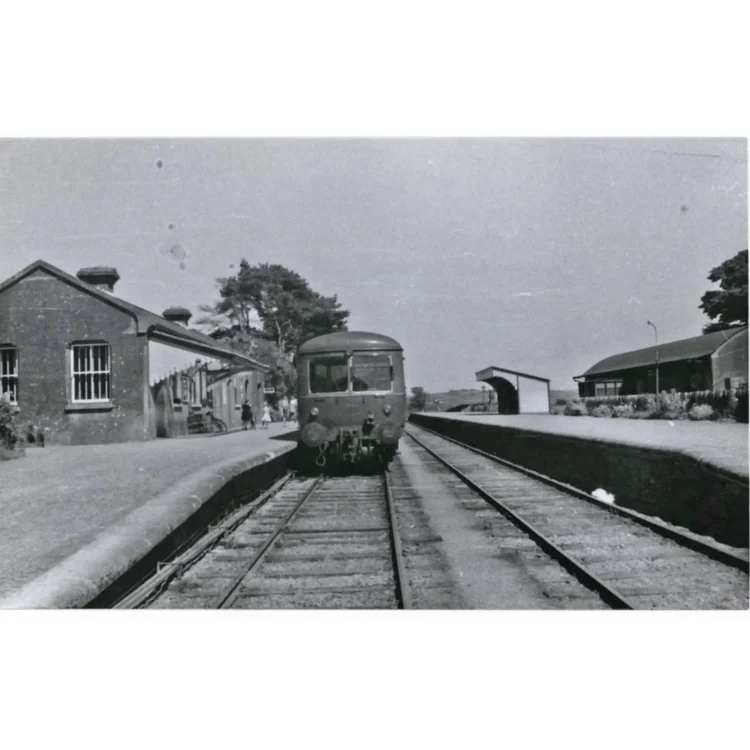
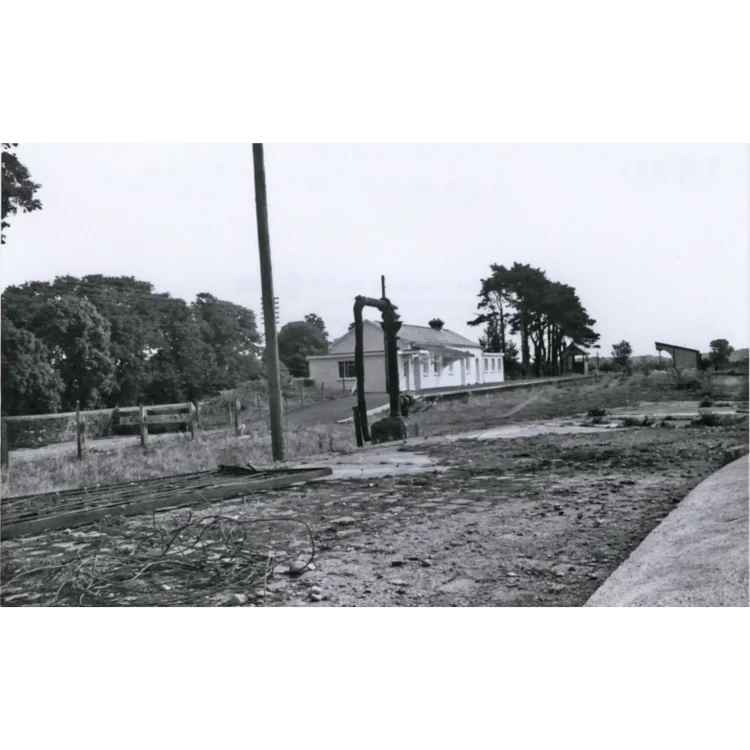
The water crane and the old station house can be seen in the grounds of Brookpark Veterinary Clinic. In Milleenananig , remains of a metal railway bridge are still evident. The layout of the railway yard in the 1960s consisted of two platforms with a station building which had a short canopy. Beyond the down platform were the goods yard and cattle bank, while beyond the level crossing on the right-hand side was a siding into Atkins Mills. Over the century, the railways benefitted from modern advances however the last train left Dunmanway 31st March 1961 after almost a century, the iron track was no more.
The area around Brewery Lane, now Park Road and the Clonakilty Road, is deeply tied to Dunmanway’s diaspora and emigration to America. From here, generations said goodbye as families gathered at the railway platform for trains bound for Cork. The line closed with the final train departing Dunmanway Station in 1961. Today, the site includes Brookpark Veterinary Clinic, the Parkway Hotel, and houses built along the route of the tracks of the West Cork Railway.
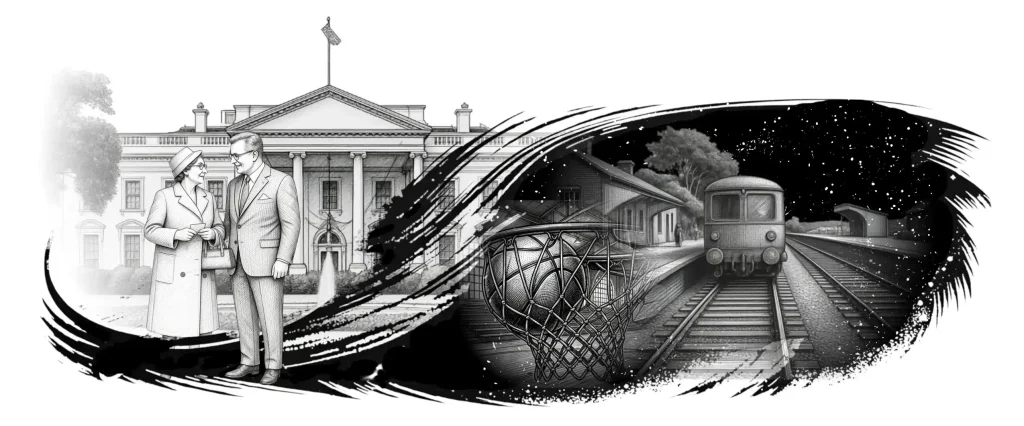
Across from the Parkway Hotel, this area became an industrial hub in the 1960s and 70s, home to a German steel fabrication factory, a hat factory, and a carpet and rug factory. The latter was reputedly commissioned to create a unique rug for President John F. Kennedy by his advisor and friend, Larry O’Brien—a notable but often overlooked son of Dunmanway.
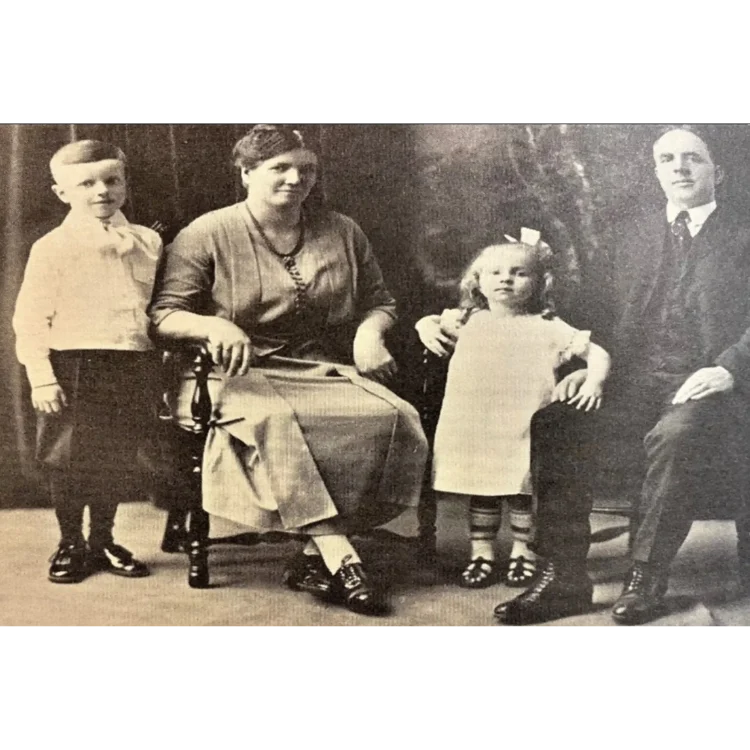
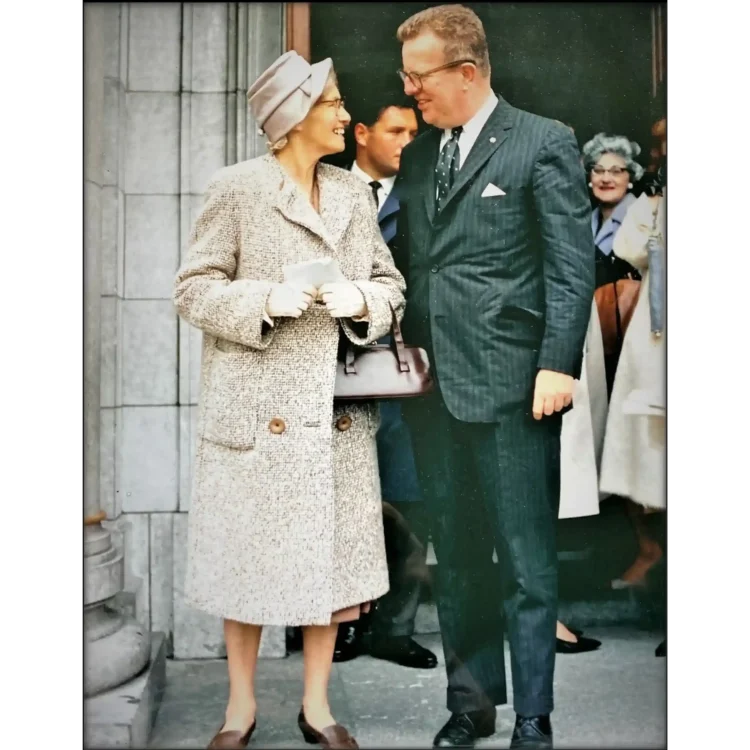
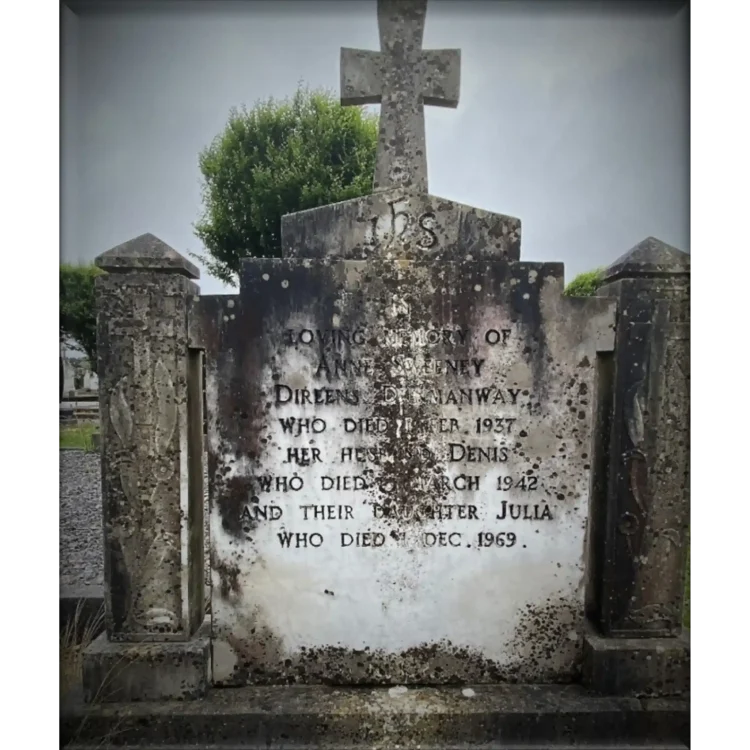
Larry O’Brien, can claim the title of our Dunmanway man in the White House. At his funeral in 1990 he was praised by Senator Ted Kennedy as a “founding father of post-war American politics” and a cherished friend of the Kennedy family. Larry was born in Springfield, Massachusetts, in 1917 to Myra Sweeney, who emigrated from Dunmanway in 1903, and Lawrence O’Brien Sr., also from West Cork. Myra was one of about ten siblings; only her sister Julia remained in Dunmanway, caring for their parents, Denis and Anne Sweeney of Direens, all three are buried in St. Patrick’s Churchyard.
Raised in Springfield, where the Kennedys also lived, Larry became a close confidant and key campaign strategist to JFK. He accompanied the administration throughout, including the 1963 visit to Cork, when his aunt Julia proudly met the President. Kennedy’s address at City Hall on June 28, 1963, celebrated the enduring kinship between Ireland and America.
O’Brien was in the car behind Kennedy on the day of the assassination. In his memoir No Final Victories, he recounts returning on Air Force One with the President’s body alongside fellow Irish associates Powers and O’Donnell—a moment of global and local significance.
After Kennedy’s death, O’Brien served President Johnson, who appointed him Postmaster General. He later chaired the Democratic National Committee and supported Robert Kennedy’s 1968 campaign. During Watergate, he was among those surveilled by the Nixon administration.
In 1975, O’Brien became NBA Commissioner, revitalising the sport and earning Sportsman of the Year in 1976. In 1984, the NBA Championship Trophy was named in his honour – The Larry O’Brien Trophy.
Notably, both this trophy and the Sam Maguire Cup—named after another Dunmanway native – link global sporting history back to this small West Cork town.
To download the full set of colouring sheets from the Dunmanway Stories on the Street Series, click here: