
Kilnadur National School
Aoife, Tom and Jack stand near the old lake, imagining what the town was like long ago.
Narrator: On a sunny day in Dunmanway, Aoife and Tom and Jack stand near the old lake, imagining what the town was like long ago.
Aoife: Tom, did you know Dunmanway’s name means “castle of the yellow river” or “castle on the little plain”? It came from an old MacCarthy castle that used to be on Castle Street.
Tom: Or even “fort of the two yellow gables,” I heard. It sounds like a story waiting to happen.
Sir Richard: A story, you say? Perhaps I can help.
Aoife: Who are you?
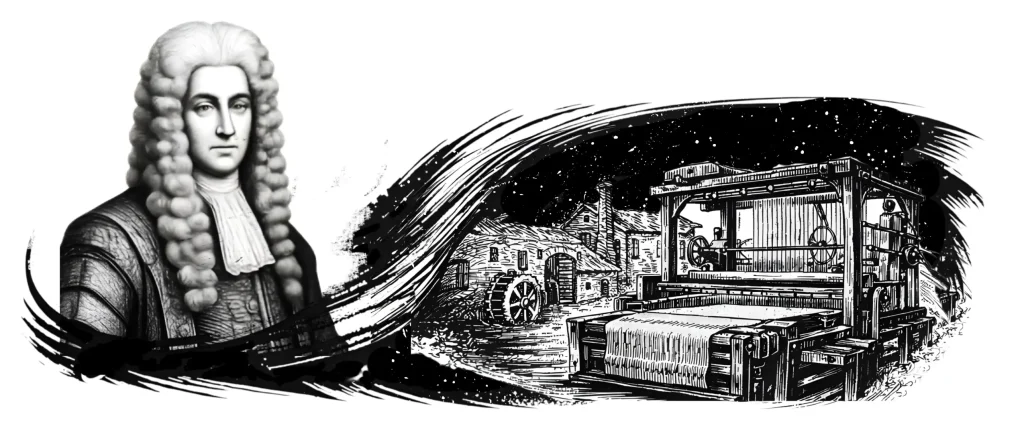
Sir Richard: I am Sir Richard Cox, born in Bandon in 1650, son of Captain Richard Cox and Katherine Bird of Clonakilty. I came from the 17th century, when your town was just beginning- in fact I was there at the start.
Jack: The man who founded Dunmanway?
Sir Richard: Indeed. Before my time, this place was mostly fields and small hamlets. People lived near old church sites like Fanlobbus and Kilbarry, where communities had been around since very early times.
Aoife: So there was no town at all?
Sir Richard: Not as you know it. Many Irish clans still held their lands through something called “Surrender and Regrant,” giving land to the king and receiving it back with English titles if they promised loyalty and to follow English law.
Tom: So what did you do?
Sir Richard: In 1690 I bought a big estate here. In 1693, King William gave me a special royal paper, called letters patent, so I could hold markets and fairs in Dunmanway. That is how your town really began to grow.
Aoife: Did you live here?
Sir Richard: I built a fine house above the lake, between two streams, surrounded by oak trees. At first I used it a summer home, fashioned in the style of a wooden Tudor-style house near where your old convent buildings stand today.
My children and grandchildren later moved their Manor Residence to the Bantry Road.
Jack: But how did people get here? I hear you built the bridge too.
Sir Richard: You are right. The River Bandon often flooded, and people could only cross a few times a year.
So I had a long stone bridge built with six arches, to make my new town easier to reach from Bandon. Until then access was from the north along Spa Road. The better the access, the better the town could grow
You know that the road had a healing well- that’s where it got the name Spa Road.
Aoife: You must have been important.
Sir Richard: I worked as Lord Chancellor of Ireland and was later made a baronet in 1706. I married Mary Bourne of Carbery, and we had a very large family—over twenty children, though only some lived to be adults. I died in 1733, and my portrait now hangs in the Royal Hospital, Kilmainham in Dublin.
Tom: What happened to your title?
Sir Richard: My eldest son, also Richard, died before me, so the title passed to my grandson, another Sir Richard Cox, who became the second baronet.
Aoife: So Dunmanway started with rivers, bridges, fairs… and you.
Sir Richard: With many people, really—but I am proud to have played my part in the story of your town.
Narrator: And with that, Sir Richard faded back into history, leaving Aoife and Tom gazing at the town he helped to create, seeing Dunmanway with new eyes.
Kilnadur National School
Aoife and Tom are working on a project about the town’s past.
Narrator: In a classroom in Dunmanway, Aoife and Tom are working on a project about the town’s past.
Aoife: Our teacher says Dunmanway was once famous for linen. I can’t really imagine it.
Tom: Me neither. No Looms and no spinning wheels today, eh?
Maggie: Did someone say linen?
Aoife: Who… are you?
Maggie: I’m Maggie a Time Traveller – I worked in the linen industry here, long ago, when Sir Richard Cox, the second baronet, helped turn Dunmanway into a busy linen town.
Tom: What was it like?
Maggie: It was exciting. Sir Richard encouraged people to grow good flax and make very fine linen. Dunmanway became one of the main places in the area to buy and sell cloth.
Aoife: Was everyone spinning and weaving?
Maggie: It felt like it! There were spinning wheels everywhere. In 1747 there were dozens of flax wheels in the town, and just two years later there were more than twice as many, plus the wheels in the spinning school he started in 1746.
Tom: A spinning school? What’s that ?
Maggie: Yes. A family came all the way from the north of Ireland to help run it and teach people. Some weaver families first lived in places like Kilmichael or even worked in Cork City mills before settling here to work in Cox’s linen mills.
Aoife: What was it like with so many weavers and spinners?
Maggie: It was busy and every year, workers who made the best cloth won prizes. The champion was called the “Master of Manufacturers” and got to live in a good house without paying rent for a whole year.
Tom: That’s amazing!
Maggie: On May Day, we spinning girls brought our wheels out to the green and spun flax together. The best and quickest spinners won prizes too. The East Green and West Green near the town centre were full of cloth bleaching in the sun.
Aoife: So, people came here to buy linen?
Maggie: They did. Dunmanway Linen Fair became famous all over. Cloth from many places was shown and sold here, and the town got bigger and busier.
Tom: But… what happened? We don’t have linen mills now.
Maggie: After Sir Richard died in 1766, things changed. He had always pushed for very high standards and newer ways of working. Without him, people went back to older methods, the cloth wasn’t as good, and big machines in other places started to take over. By the early 1800s, our linen trade was failing.
Aoife: That’s sad.
Maggie: The town stayed, though. By 1837 there were over two thousand people living here, and later members of the Cox family still owned much of the land and the Manor House. In time, they sold most of the estate, and today the old Cox family vault can be seen at St Mary’s Church yard
Tom: So, your work helped build the town?
Maggie: Every thread helped. Spinners, weavers, farmers, and families from Scotland and the north who came here to work—we all wove Dunmanway’s story together.
Aoife: Will we remember you?
Maggie: When you walk by East Green or West Green, or hear about the old linen fairs, think of the wheels turning and the cloth drying in the sun. Then you’ll remember us.
Narrator: Aoife and Tom look at their project. Now the numbers and dates feel like real people, real wheels, and real cloth.
To download the full set of colouring sheets from the Dunmanway Stories on the Street Series, click here: