
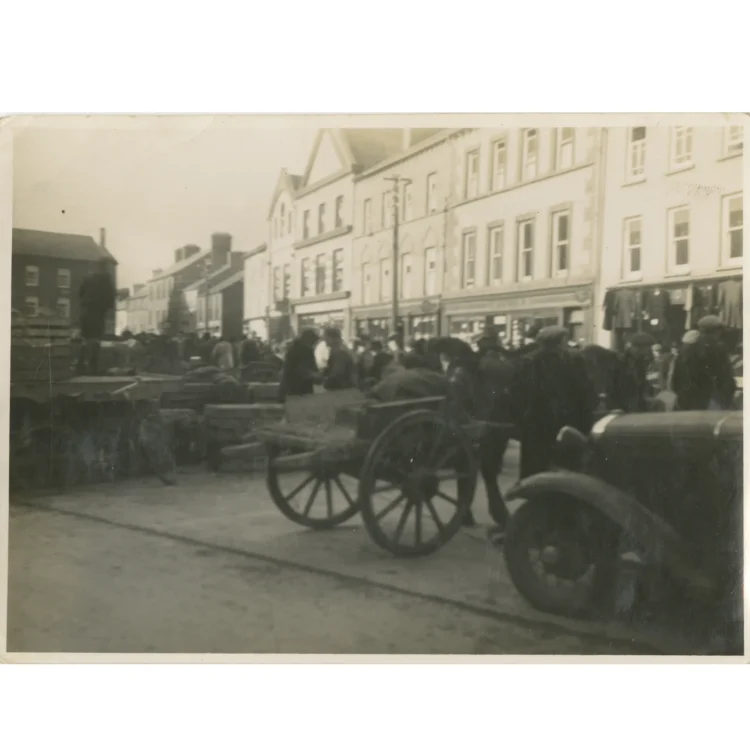
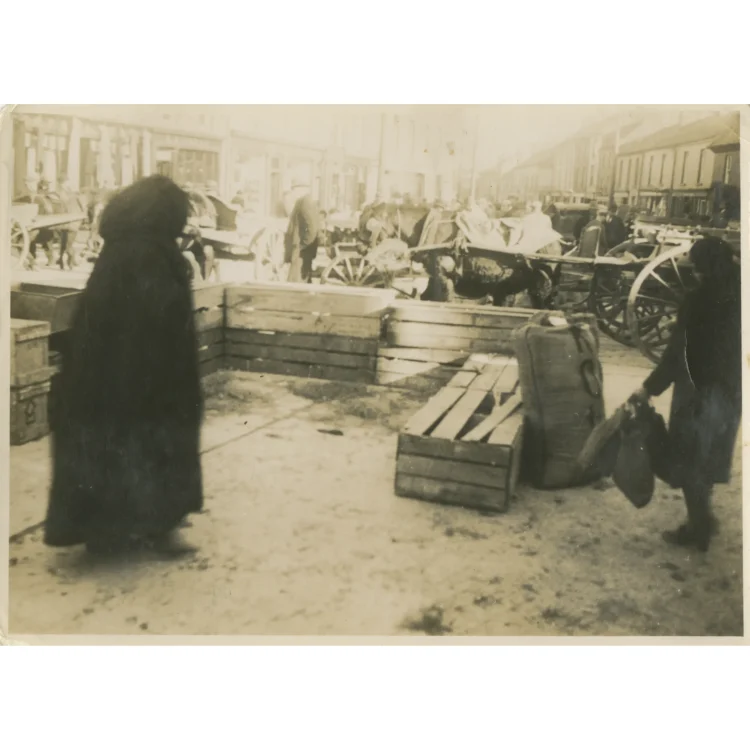
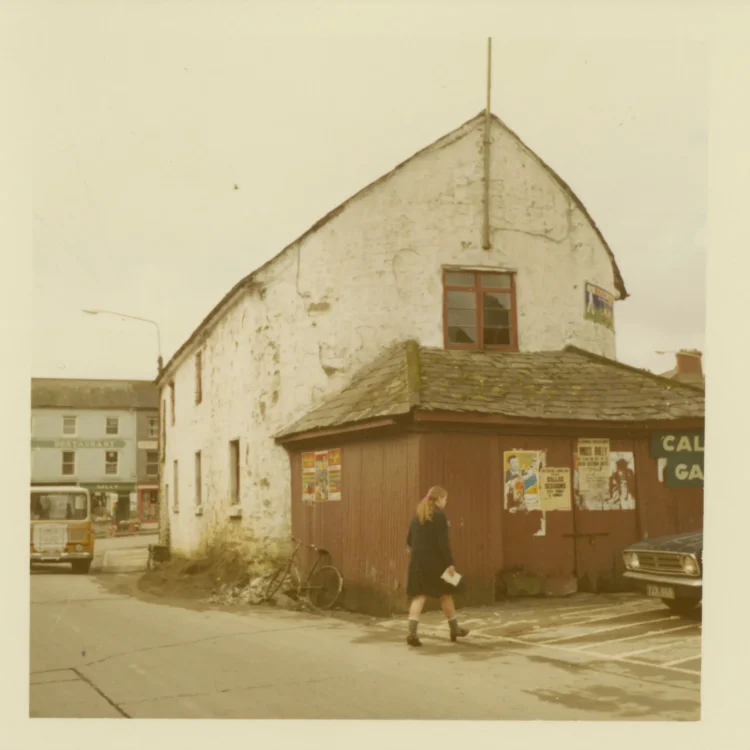
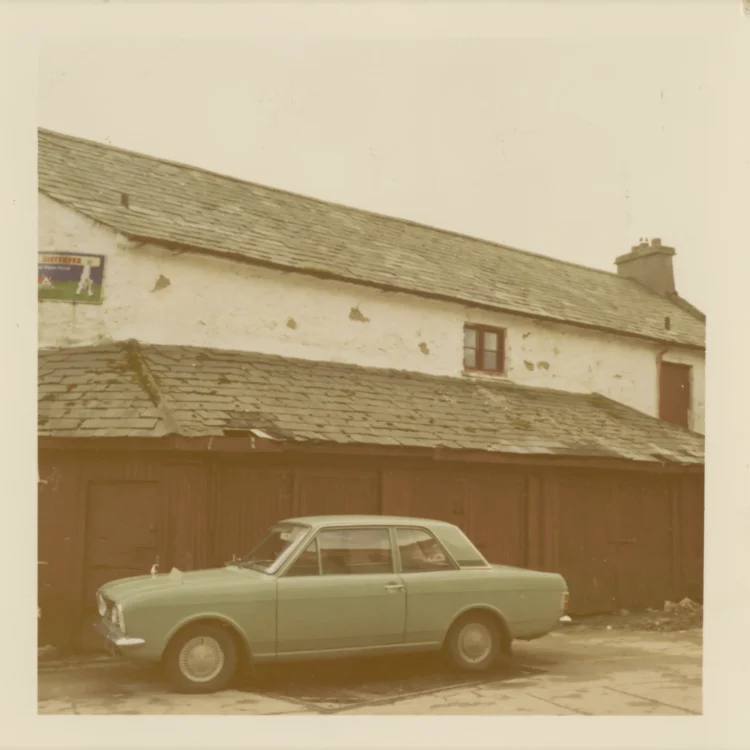
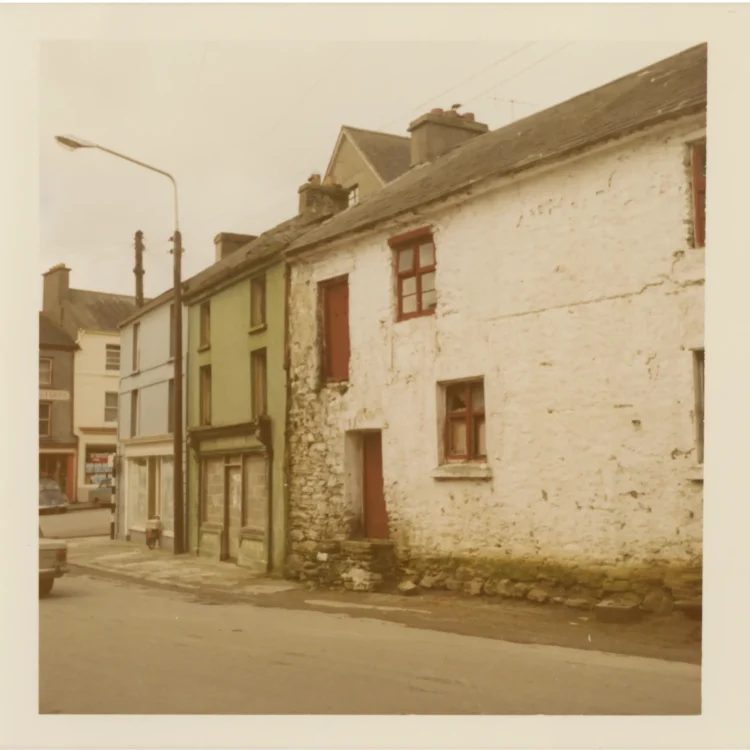
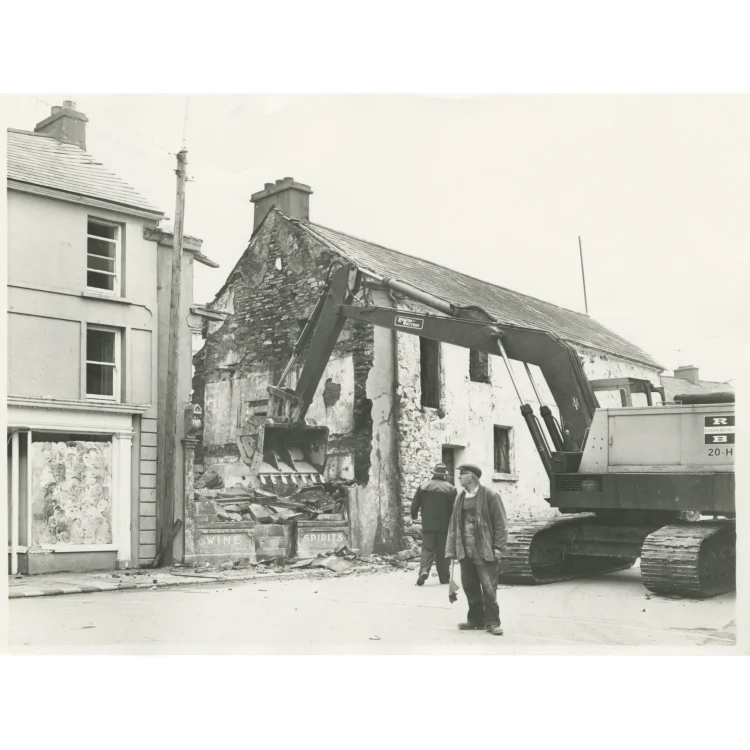
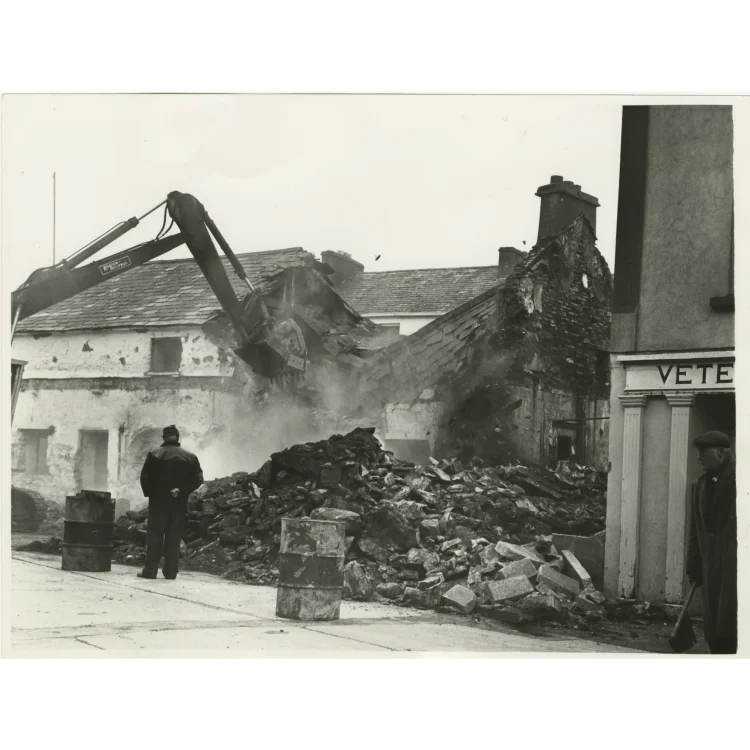
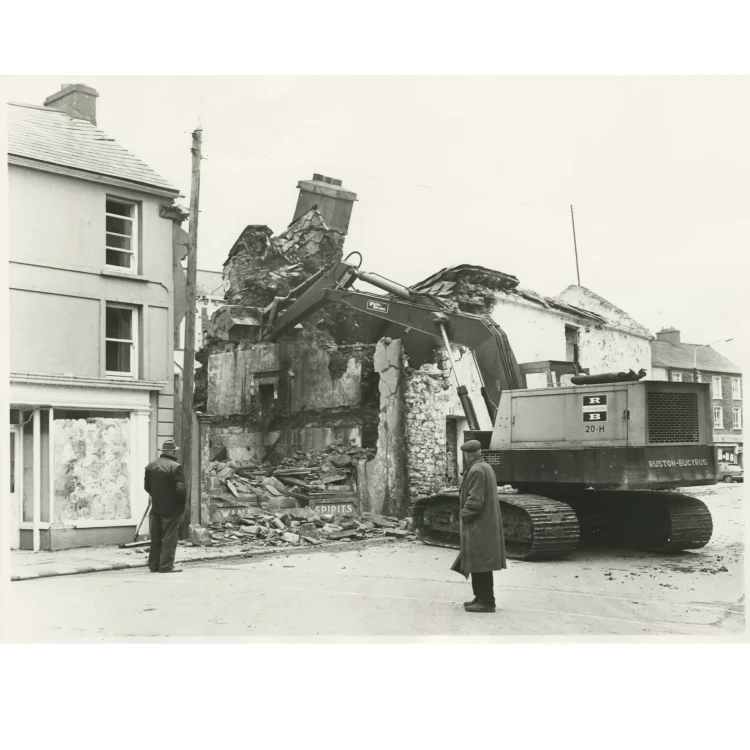
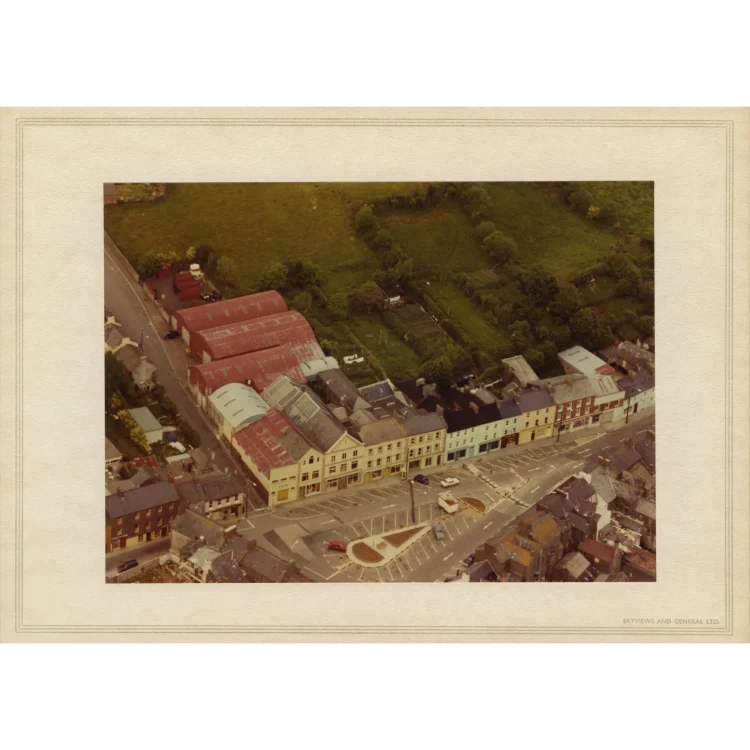
In 1972 the hub that was the Market House and the surrounding buildings in Dunmanway Square were demolished. Buildings erected in the mid-18th and 19th century came crashing down. It was the end of an era.
Built by Sir Richard Cox, the market house was rumoured to have been built from the demolished stone of the MacCarthy Castle at Castle Street. It remained in the Cox Family until 1871 when it was purchased by Captain Shuldham.
In 1842- William Makepeace Thackeray, in his travels around Ireland, passed through Dunmanway. He claimed the stagecoaches travelled at 7 miles an hour – his final destination was Skibbereen so he had plenty of time to take in the landscape.
In it he described Dunmanway Market House as follows:
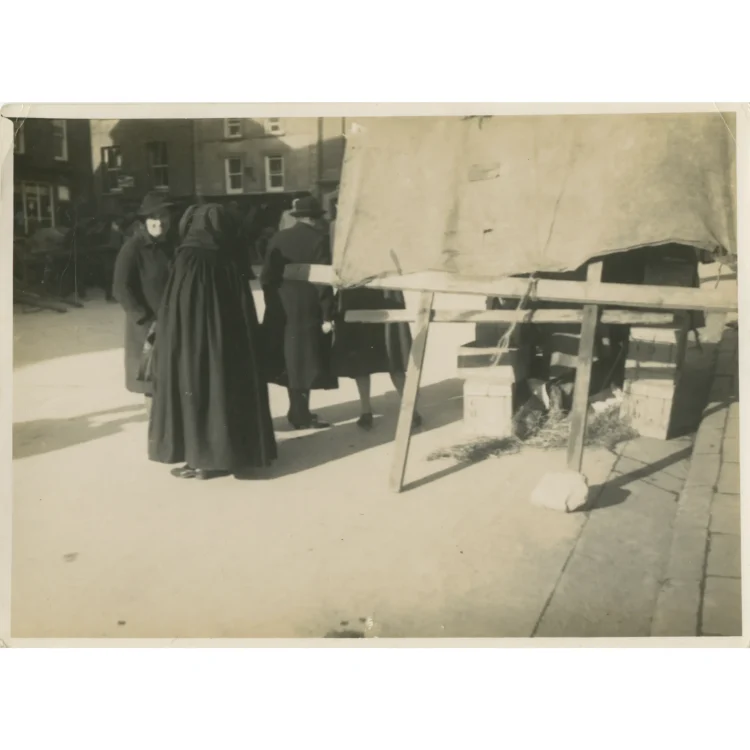
“Here it was market day, and as usual no lack of attendants; swarms of peasants in their blue cloaks, squatting by their stalls here and there. There is a little market house, where a few women were selling buttermilk; another bullock’s hearts, liver and such scraps of meat, another had dried mackerel on a board.”
The Market was on a Tuesday with fairs, mainly for cattle, held on May 4th, on the first Tuesday in July and on September 17th and November 26th.
At the intersection of the principal street was the large building used as a market house and other adjoining premises. It housed a famous butter market.
There was a constabulary station. A Manorial Court and a Petty Sessions Court were held there. It also had a victualler shop.
It comprised a two-storey building where a family known as the O’Shea’s lived in the upper floor and they held the tolls of the town until they were evicted in 1871 by Captain Shuldham. The eviction of the O’Shea’s was a whole other story involving riots and a standoff with local constabulary.
The O’Sheas’ living quarters became a corn store for many years. In the first half of the 20th century , the market house area, included a veterinary practice, a picture house cinema in the top floor and a boxing gymnasium, later used as a Local Defence Force Training Hall. There was a drapery known as Paris House.
In the 1950s the bottom portion ceased to be used as a market house and became a store.
In the early years, Dunmanway consisted of one long street extending to over half a mile to the west of the bridge. By 1831 there were 419 houses, which were noted for their clean appearance, though different in size. A small post office was opened but it was supervised from Bandon.
Road infrastructure improved by early 19th century. A reading room was established in the town in 1832 but it never really took off and went into decline.
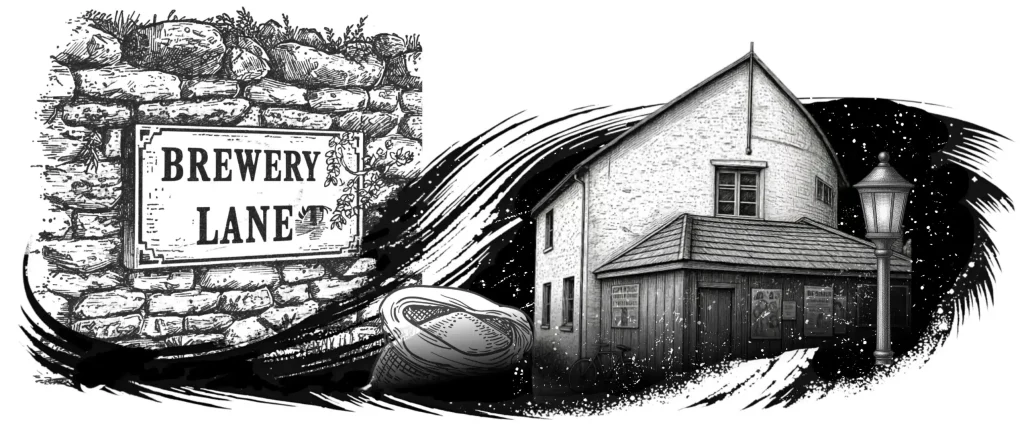
Throughout the centuries , other businesses contributed to the vibrant commercial life in Dunmanway including a porter and ale brewery which was established in 1831 at Brewery Lane and Brewery Bridge – now known as Park Road. They produced 2,600 barrels of beer annually.
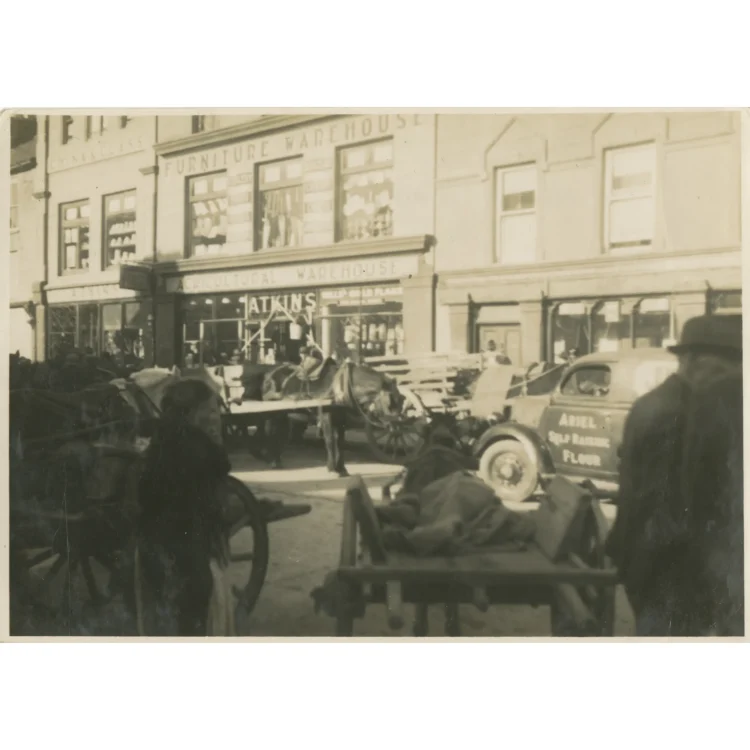
Three tanyards were operational in the town from the mid to late 18th century until the early twentieth century – although not all at the same time. Under the ownership of the Atkins Family they produced leather and goods for export, while also providing leather for local shoemakers and harness makers.
The tanning industry was centred around Tanyard Lane until 1929 when it closed. The building was eventually demolished in 1961.
Two boulting mills, at Kilbarry Road and Pearl Valley, formed part of the early industrialisation of the town. These mills ground upwards of 15,000 bags of flour per annum.
In 1911, Dunmanway’s commercial life benefitted from streetlights and an early private system of electrification. The powerhouse was located in Gillespie’s Yard, now the West End Yard.
The builder, Gillespie, was from Roscommon and he believed that Dunmanway was a market town of commercial stature that suited a twenty-horsepower unit and with 110 volt supply. Installation of house light points could be fitted for those who could afford it or to rent it. In 1936 the Electricity Supply Board took over the Bandon Milling Company who had bought the business from Gillespie’s widow.
One shop from the nineteenth century continues to trade today in the Market Square, D. Crowley’s otherwise known in the past as Mrs. Dan’s. The facades of the buildings in the Market Square are reminiscent of the past, still echoing their original design and form part of our built heritage.
To download the full set of colouring sheets from the Dunmanway Stories on the Street Series, click here: