Plaque 8: Flying Beamishes – Rugby Heroes & Flying Aces of WW2
On the Field
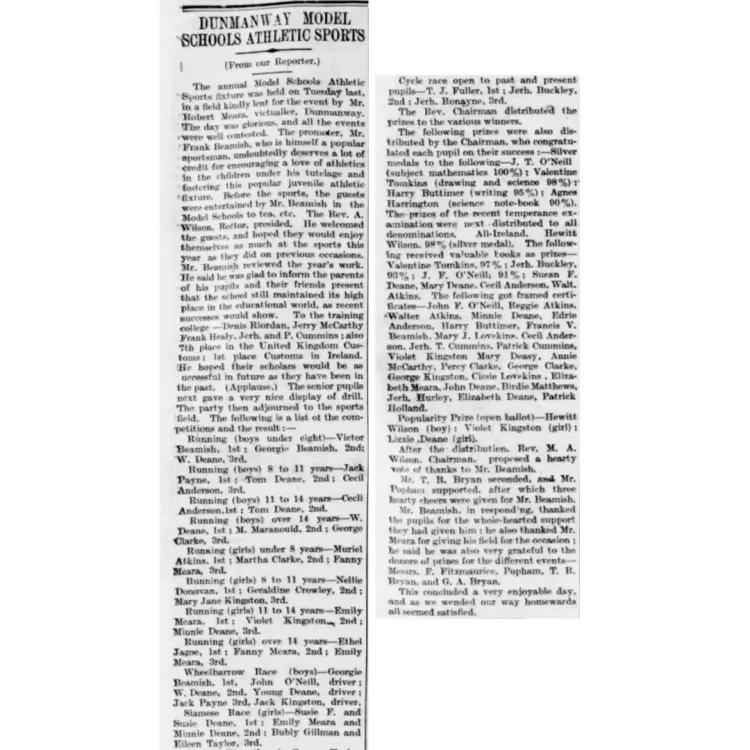
In 1903, local Dunmanway man Francis Beamish of Acres, a farmer’s son was appointed Headmaster of the Model School. A notable academic and sports enthusiast he graduated with an MA in literature. He also was an excellent bee-keeper and wrote many articles on the topic. He also was quite the sportsman and newspapers of the time recount the sporting achievements of the pupils of the Model School in 1911. He left Dunmanway when he was promoted to the position of School Inspector ain 1912. As a result the family moved north and finally settled in Coleraine. Separated by the events of the Revolutionary years in the 1920s, it was to be many years before members of Francis’ family were to return to Dunmanway. However, his children made a huge contribution to Irish and International Rugby, not to mention their distinguished military careers in World War 2. Francis returned from Larne, Co. Antrim to be buried in Dunmanway at Saint Mary’s Church yard having passed away at just 53 years of age. His funeral was a quiet affair.
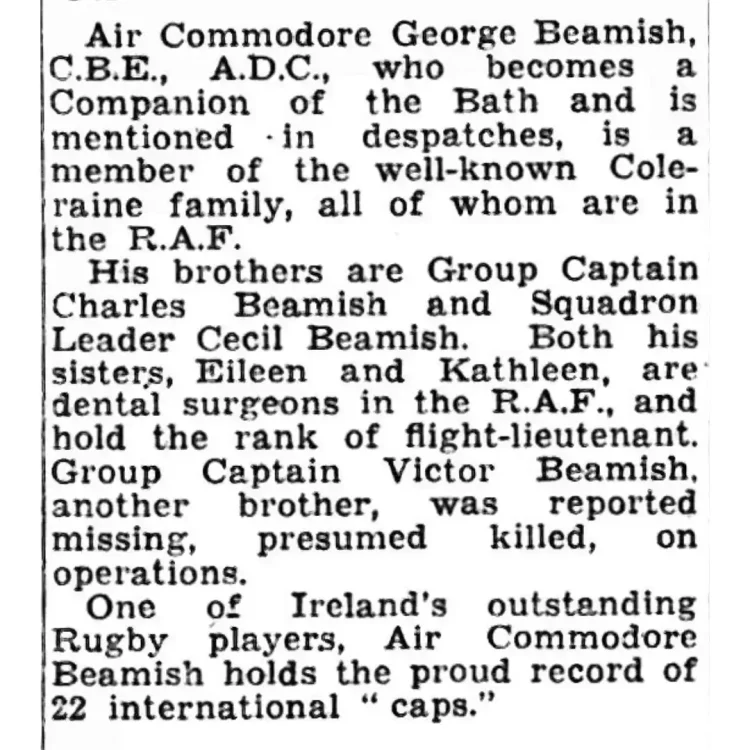
Francis and his wife, had six children. A number of the children were born in the headmaster’s residence before their father’s promotion. The Beamish children – Victor, Charles, George , Cecil, Kathleen and Eileen all went on to have distinguished careers both on the field of rugby, golf , in the air in the many aerial battles and combat zones of the second world war.
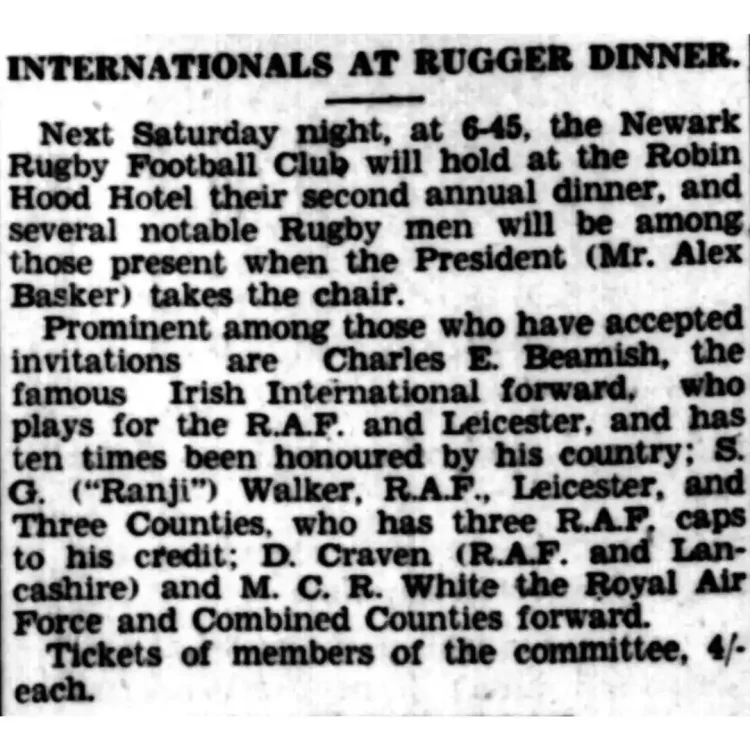
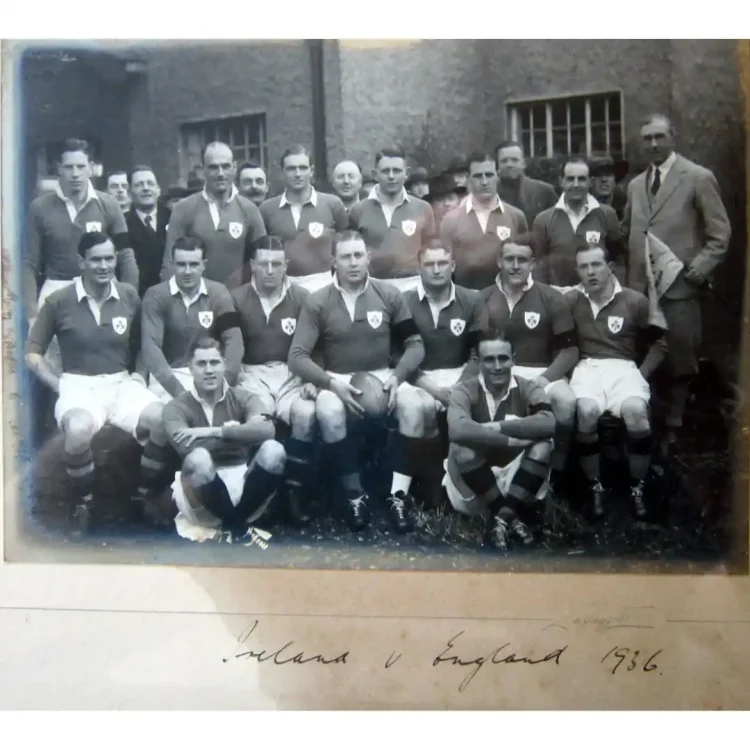
Two of the older boys were students in the model school for a while. As Sporting Enthusiasts they all loved golf and in particular rugby. All four of the boys played rugby at various levels, both for Ireland and at international levels. However, it was both Charles and George who made Rugby Headlines in the years before World War 2. George was capped 25 times and travelled with the Lions Tour to New Zealand in 1930, wearing the number eight jersey. Charles scored Ireland’s first-ever try against the New Zealand on December 7, 1935, at Lansdowne Road. The following year Charles was picked for the Lions Tour to Argentina in 1936. He made many headlines as a prop. The Lions won all ten of their fixtures including the one Test. Charles was capped 12 times for Ireland. Cecil and his sisters excelled at golf, they won numerous competitions. There are many links with the Beamish family and Portrush Golf Club.
Today when we think of the Lions Tour – spare a thought about the kit they wear. For it was George who led a delegation to the management in the 1930 Lions Tour of New Zealand expressing disappointment of the lack of any input of Ireland into the strip. There was no green representing Ireland. As a result- a green splash was added to the socks.
In the Air
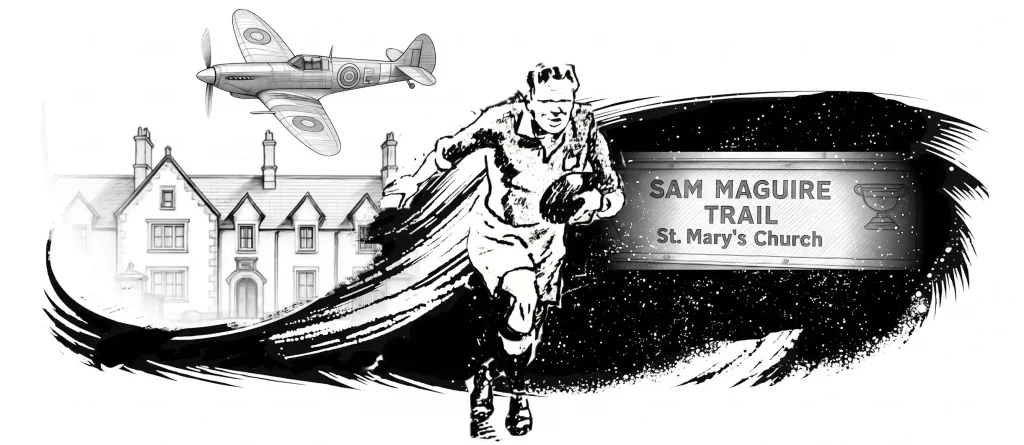
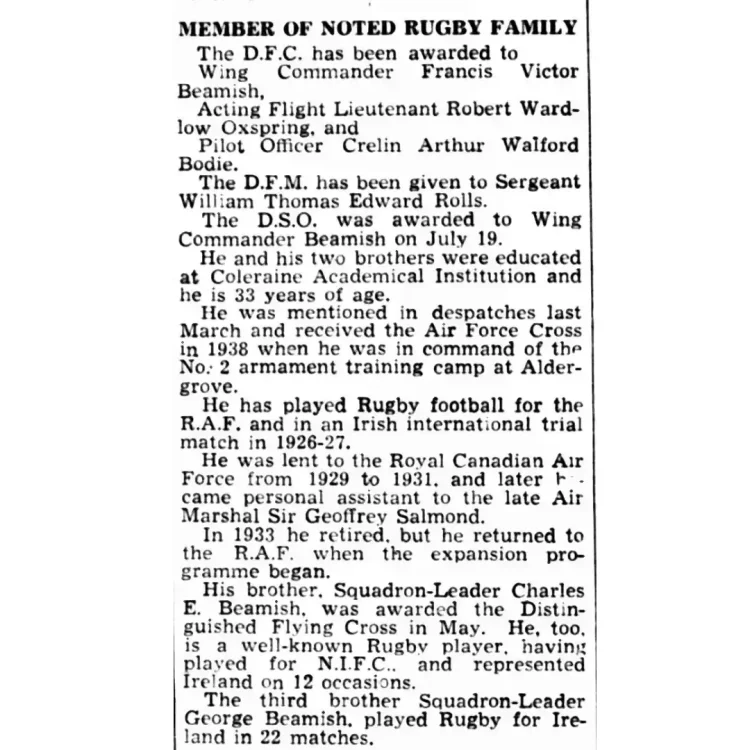
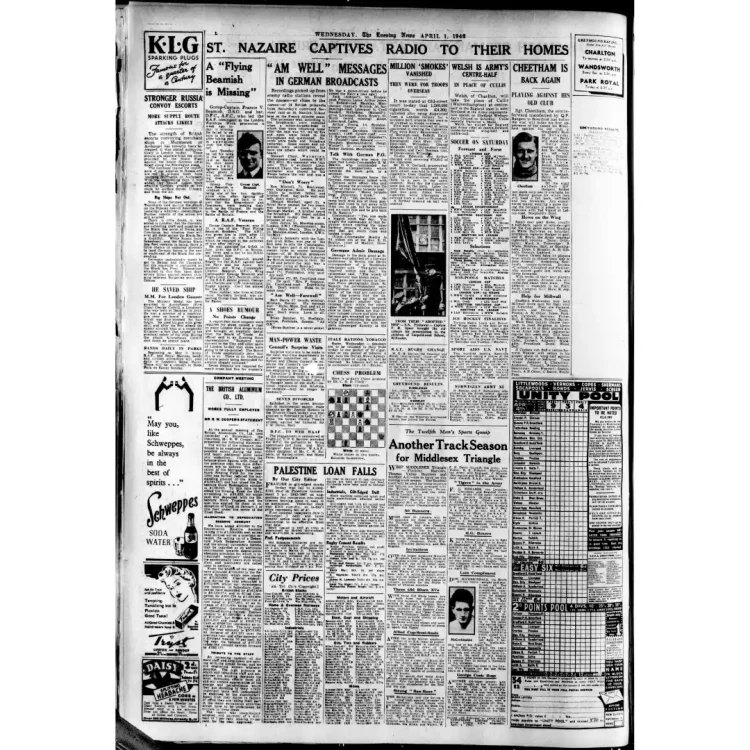
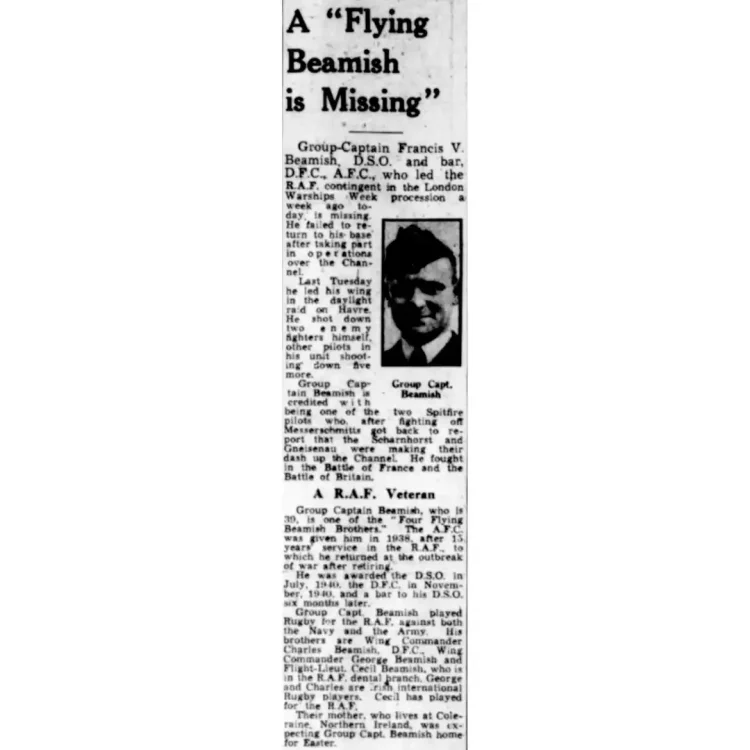
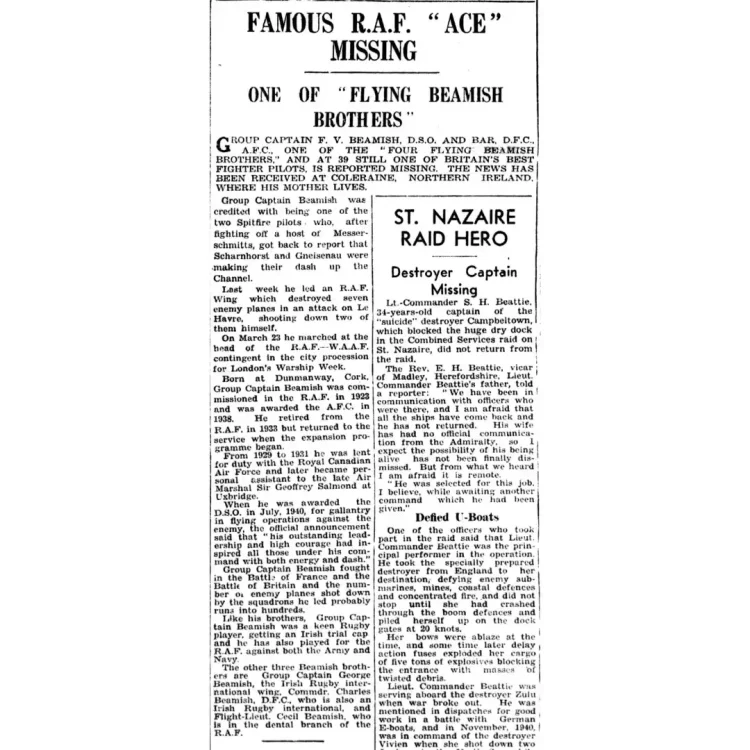
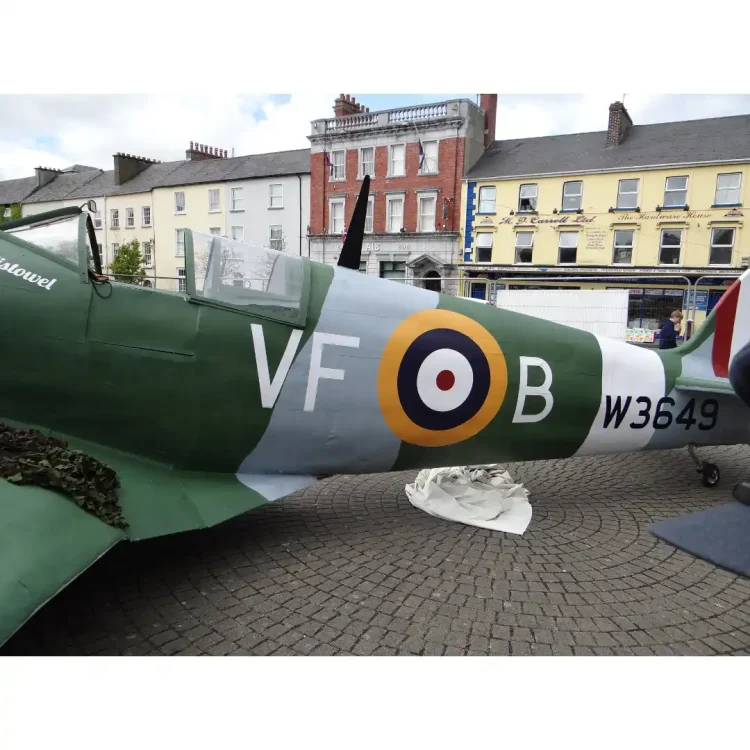
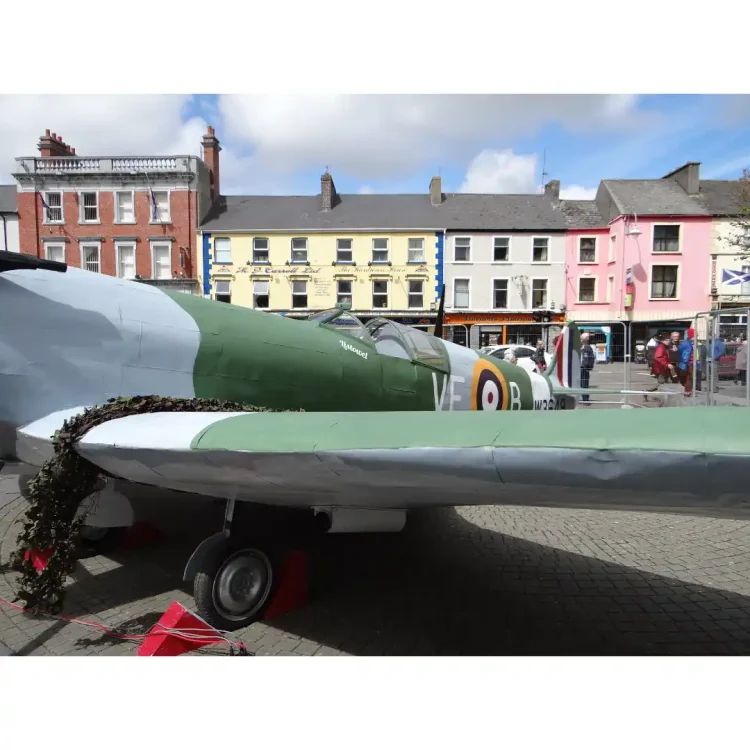
Just like their prowess on the field of Rugby they exhibited prowess in the theatre of war especially aerial combat. Group Captain Victor Beamish served with distinction and was awarded numerous medals . He was shot down in 1942 by an F W 190 over the English Channel off Calais. Prior to World War 2, Victor was a flight trainer on loan to the Canadian Air Force. He was such a respected flying ace that a street in Kenley, was named in his honour. Victor Beamish Avenue is located near the historic Kenley Aerodrome and Kenley Common near Croydon in Surrey. His brother, air marshal Sir George Beamish survived the war. George met with many notable characters of the War years, including General Montgomery in the North Africa Campaign. George had an illustrious career and was senior RAF officer in Crete during the Battle of Crete in 1941. After the war George became Director of Weapons at the Air Ministry in 1947 and became Commandant at RAF Cranwell in 1949. Group Captain Charles, also a pilot, flew over the beaches of Normandy in the D-Daly landings of 1944 and had a very interesting military career. Cecil who was a dentist with the R A F medical unit- engaged in pioneering facial reconstruction and dentistry for the war wounded of World War 2. He was a close friend of Archie MacIndoe who pioneered plastic surgery and who was involved in the Guinea Pig Club which was a support group for those who needed reconstructive surgery during the war years. The sisters, Eileen and Kathleen both also served in the RAF in the medical side, both attaining the ranks of Flight Lieutenant. The Beamish brothers are often referred to as the Flying Beamishes and were adept at handling many aircraft, in particular the iconic spitfires. One family from Dunmanway contributed an impressive two flight lieutenants, one air marshall, one vice-air marshall and two group captains to aerial combat of the Second World War.
On the field and in the air – what an amazing legacy from the past Headmaster and his children, the likes of which may not be seen again.
A Few Outstanding Military Awards
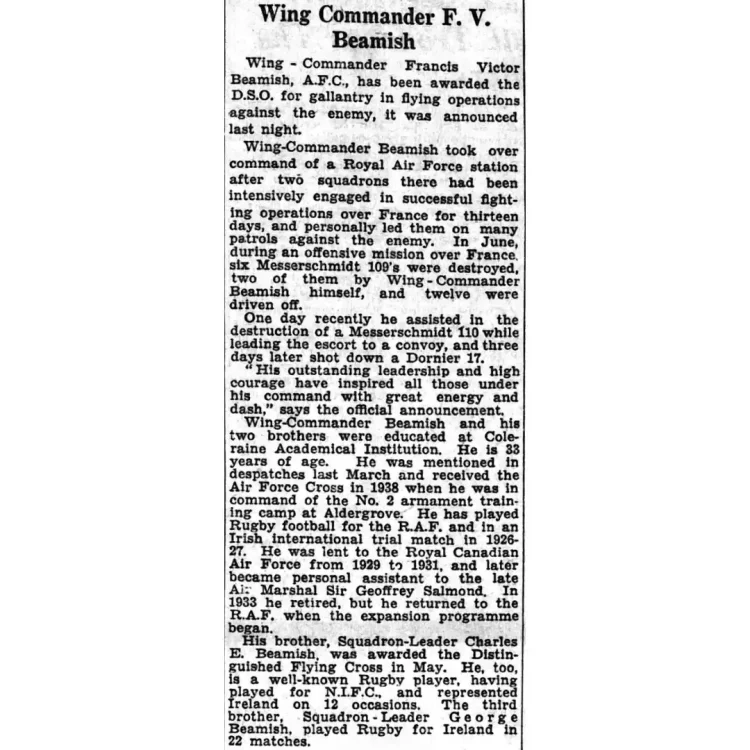
Wing Commander (later Group Captain) Francis Victor Beamish was awarded the Distinguished Service Order (DSO) on July 23, 1940 by King George VI in recognition of Beamish’s “courage and leadership”. The award recognised his outstanding leadership as the Station Commander of RAF North Weald during the early stages of the Battle of Britain. He held the rank of Wing Commander at the time of the Award. He was later awarded a Bar to add to his DSO September 2, 1941.
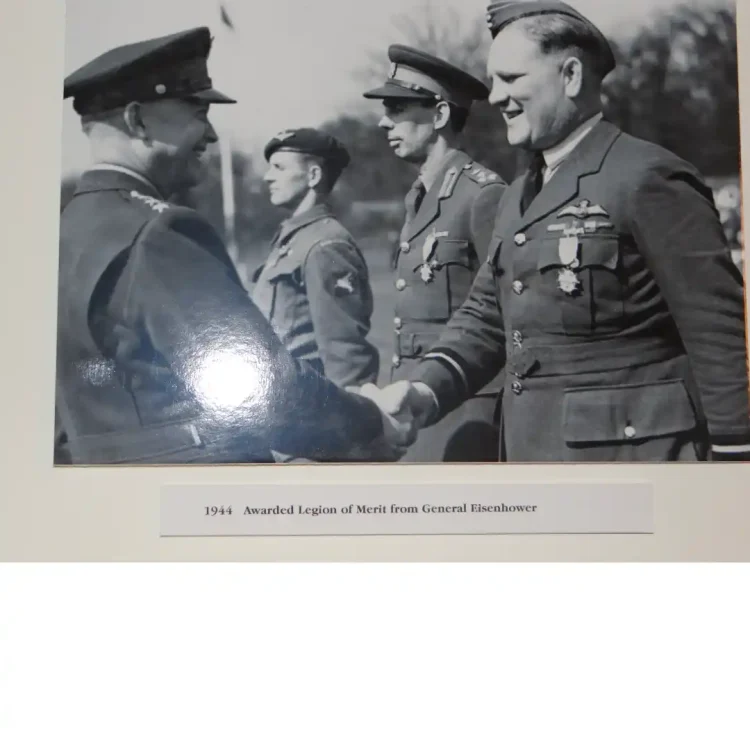
The American Legion of Merit was awarded to George Beamish by General Eisenhower before the end of WW2 and the same award was made to Charles Beamish by President Harry Truman in 1946.

![A front-on, close-up photograph shows a framed, rectangular military award certificate (Legion of Merit) presented on slightly aged, off-white paper. The document is mounted inside a simple, thin black frame against a plain white wall.At the top centre of the certificate, there is a coloured illustration of the United States Legion of Merit medal suspended from a wavy red ribbon with white borders. Small, faint five-pointed stars are printed in the upper left, upper right, lower left, and lower right corners of the page border. At the bottom centre, a circular, embossed official seal of the United States War Office is visible. Two handwritten signatures in dark ink appear at the bottom, one on the left and one on the right, above printed titles. Transcribed TextTHE UNITED STATES OF AMERICA TO ALL WHO SHALL SEE THESE PRESENTS, GREETING: THIS IS TO CERTIFY THAT THE PRESIDENT OF THE UNITED STATES OF AMERICA IN ACCORDANCE WITH THE ORDER ISSUED BY GENERAL GEORGE WASHINGTON AT HEADQUARTERS, NEWBURGH, NEW YORK, ON AUGUST 7, 1782, AND PURSUANT TO ACT OF CONGRESS, HAS AWARDED THE LEGION OF MERIT Degree of Officer TO Group Captain Charles Beamish, Royal Air Force FOR EXTRAORDINARY FIDELITY AND EXCEPTIONALLY MERITORIOUS CONDUCT IN THE PERFORMANCE OF OUTSTANDING SERVICE GIVEN UNDER MY HAND IN THE CITY OF WASHINGTON THIS 27th DAY OF February 1946 RECORDED IN THE OFFICE OF [Signature: Edward F. Witsell] Major General The Adjutant General [Signature: Robert P. Patterson] Secretary of War](https://dunmanwayhistoricalassociation.ie/wp-content/uploads/elementor/thumbs/Plaque_8_Charles-Beamishs-Legion-of-Merit-Award-Certification-roer5f7t058adffb4p3kt3pb3suca2r8z507821y30.webp)